Language Settings
Select Website Language
newshunt
newshunt

Filters

Channels
Topics
Other Filters

India Eyes Isobutanol-Blended Diesel To Cut Fuel Dependence And Pollution

India may soon mandate blending isobutanol with diesel and introduce new rules for truck-trailers as part of efforts to strengthen energy security and reduce carbon emissions. Speaking at a Confederation of Indian Industry (CII) summit on Friday, V. Umashankar, secretary at the ministry of road transport and highways, said the proposed blending mandate is being considered seriously and could roll out later this year. “Bharat Petroleum is already undertaking strategic research for isobutanol blending with diesel. And the results are very encouraging. It is quite likely that the blending mandate will start coming in somewhere later this year. And diesel consumption is almost two times that of petrol consumption. So, blending diesel will have a far greater impact on our energy security than blending petrol,” Umashankar said. Government Studying Flex-Fuel Engines The ministry has also commissioned the Automotive Research Association of India (ARAI) to study flex-fuel engines capable of running on up to 100% isobutanol as an alternative to diesel. The research will include vehicle testing to assess engine performance using isobutanol-blended fuel. Isobutanol is a biofuel produced from ethanol through fermentation. Compared with ethanol, it has a higher energy density and is less corrosive, making it more suitable for blending with diesel. According to data from initial tests, isobutanol blending significantly reduces pollution from diesel vehicles without affecting vehicle performance. The fuel may also not require major modifications to existing engines or exhaust systems. Mint had reported in August 2025 that the government was planning isobutanol blending with diesel and exploring flex-fuel engines capable of running on up to 100% isobutanol. Draft Rules Soon For Truck-Trailer Interchangeability Umashankar also said the ministry will soon issue a draft notification for truck trailers to support a new ecosystem for heavy-duty electric trucks. The initiative is aimed at addressing infrastructure challenges related to battery charging and swapping. According to the secretary, the ministry is exploring “tractor-trailer interchangeability” as an alternative to lengthy charging times and complex battery-swapping systems. Under the proposed model, the front unit of a truck would be detached and replaced with a fully charged unit, while the trailer remains in operation. The replacement would take place at designated locations. Hydrogen-Powered Buses Running  Speaking about hydrogen logistics projects, Umashankar said the government’s pilot experiments have shown positive results. “The results are very good. The key cost is comparable with respect to other forms of logistics travel. It's not high. The only high-cost element there is the hydrogen re-fuelling stations. And presently in the pilot projects government support is being provided,” he said. He added that hydrogen-powered public buses have recently been launched on routes connecting Delhi with Faridabad and Noida. “Hydrogen refuelling stations have already been set up under this scheme. These buses can travel 450 km before needing a refuel. So for the Delhi-Mumbai corridor, maybe three refuelling stations will be needed,” the secretary said while responding to a question by Ashwani Gupta, chairman, CII national committee on ports and shipping, and whole time director & CEO, Adani Ports and SEZ. Barrier-Less Tolling System Likely  The secretary also said multi-lane free flow (MLFF), a barrier-less tolling system that removes the need for vehicles to stop or slow down at toll plazas, is likely to be introduced in the “forthcoming year”. “This (MLFF) has already been introduced in two toll plazas and it's working very successfully. The third one is likely to go live in the next 8-10 days. We plan to expand this to all four-lane-plus toll plazas across the country within the forthcoming year. We are also going to put in place an advanced traffic management system. We have got the first proposal for Delhi NCR approved. Issuing bids and the project implementation will start very shortly,” he added. To improve average vehicle speeds on roads and highways, the ministry also plans to focus on separating slow-moving and fast-moving traffic on expressways and access-controlled highways.

Maruti Suzuki Fronx Flex Fuel Car To Be Unveiled By Nitin Gadkari On 4th June 

Maruti Suzuki will unveil it's first flex fuel car in India and it will be unveiled by Union Minister Nitin Gadkari and Hardeep Singh Puri.  It would be the first flex fuel car from Maruti Suzuki and it is likely to be the Fronx which was earlier showcased as well.  Flex Fuel Car A flex fuel car can run upto E100 ethanol fuel and Maruti Suzuki earlier had unveiled the Flex Fuel cars at global motor shows.  We expect the Fronx Flex fuel to be showcased.  It will be India's first E100 compatible car and augurs with Governments push for a lower fuel import bill along with a cleaner environment.  Flex fuel cars have to be extensively modified and use a different system altogether to be able to use E100 fuel which a standard car cannot run on.  These cars have an entirely different fuel system and would be more expensive over a standard car but the environment benefits would be higher.  The Fronx from Maruti Suzuki isn't the only car as more manufacturers are also working on flex fuel cars and it will also increase once a roll out of the E100 fuel would be there or a much higher blend.  Maruti Suzuki previously showed a flex-fuel Wagon R prototype at the Bharat Mobility Global Expo 2024, while a Fronx compatible with E85 fuel was shown in Japan.

Invisible Spending Crisis: Why Rs 99 Subscriptions Are Costing More Than Gen Z Salaries Expect

What appears to be harmless, Rs 99 or Rs 149 subscriptions, can, when accumulated, form a surprisingly heavy monthly outflow for many young earners. An increasing number of young Indians are now finding that their salaries are not being eroded by large discretionary purchases such as luxury items or high-end electronics, but by a steady stream of small, recurring digital payments that often go unnoticed for extended periods. A growing conversation around “invisible spending” has resonated with young professionals who say that monthly charges from food delivery platforms, OTT services, music streaming apps and membership programmes are steadily eating into their disposable income. App Trap Economy The issue gained traction after a Reddit user shared his surprise at discovering where his monthly income was actually going. “There were no expensive gadgets. No luxury shopping sprees. No major purchases,” the user wrote. On closer inspection of his bank statements, he realised the drain was not caused by a single large expense but by numerous small, automatic deductions. Individually, services such as Swiggy One, Zomato Gold, Netflix, Amazon Prime, Spotify and Jio Hotstar appeared inexpensive, most priced under Rs 200 a month. However, combined together, they formed a significant recurring monthly burden. The post has since fuelled wider discussion around what users are referring to as the “app trap economy”, where multiple low-cost subscriptions accumulate quietly in the background. Why “Just Rs 99” Feels Harmless For many consumers, the appeal lies in the low entry price. A single subscription rarely appears financially significant. Platforms reinforce this perception through student discounts, trial periods, introductory pricing and low monthly plans, all of which make spending feel manageable. The challenge emerges when multiple services stack up across entertainment, food delivery, shopping, cloud storage, fitness and productivity tools. Many users admit they lose track of active subscriptions because payments are processed automatically via UPI, debit cards or credit cards, and cancellation is often postponed indefinitely. OTT Overload And Unnoticed Renewals A Delhi-based professional told NDTV that she eventually realised she was subscribed to most major OTT platforms despite rarely using them. “I always felt what if a new movie or series releases on a platform I don’t subscribe to?” she said. Over time, she found that fatigue after work meant she was not actually using most of the services she was paying for. “Meanwhile, the subscription money kept getting auto-debited every month,” she said. She has since adopted a “rotation approach”, keeping only one OTT subscription active at a time instead of maintaining multiple services simultaneously. Changing Consumption Habits Among Gen Z The discussion also reflects a broader shift in spending patterns among younger consumers. Unlike earlier generations that prioritised physical goods, Gen Z spending is increasingly centred on subscriptions, convenience services and digital experiences. Food delivery memberships, OTT platforms, gaming services, AI tools, shopping memberships and music streaming plans are now standard monthly commitments for many salaried individuals. Unlike rent or EMIs, however, these costs are fragmented across platforms and therefore remain less visible in day-to-day budgeting. As a result, many only recognise the total impact after reviewing bank statements in detail. Cost Pressures Driving Course Correction With inflation and urban living costs continuing to rise, many young professionals are becoming more conscious of recurring digital expenses. Users online say they are now actively reviewing subscriptions on a monthly basis, cancelling unused services and limiting active memberships. The shift reflects a move towards more deliberate spending choices, rather than allowing automatic renewals to continue unchecked. ALSO READ: India's Economic Resilience Faces Its Toughest Test Since The Pandemic Era. Economists Sound Alarm While a Rs 99 charge may seem insignificant on its own, many are now realising that repeated small deductions can accumulate into a meaningful portion of monthly income. ALSO READ: You No Longer Need Your Bank SIM Phone To Make UPI Payments: Here Is How

You No Longer Need Your Bank SIM Phone To Make UPI Payments: Here Is How

A lot of people today use two smartphones at the same time, one for work and one for personal use. But when it comes to making UPI payments, things get complicated. Most UPI apps only work on the phone that has the SIM card linked to the registered bank account. This means users have to carry that one specific phone every time they need to make a payment. However, there is now a built-in solution for this problem.  UPI apps have rolled out a feature called UPI Circle, which lets users make payments from a second device using the same bank account. In some apps, this feature goes by a different name. For instance, PhonePe and Google Pay offer it under the name Pocket Money. What Is The UPI Circle Feature And How Does It Work? UPI Circle allows the primary account holder to give payment access to another user or another account. It works well for parents who want to give their children limited spending access, or for someone who simply wants to use two devices with one bank account linked.  ALSO READ: GTA 6 Leak Or Just A Bug? This Strange Car Detail In GTA Online Has Players Guessing The secondary account can be set up to either seek approval from the primary user for every payment or operate independently within a fixed spending limit. How To Set Up UPI Circle In Your Phone Setting up UPI Circle or Pocket Money is straightforward. Open the UPI app on your primary phone and search for the Circle or Pocket Money option within the app.  From there, tap on "Invite Dependent" and select the mobile number you want to add to your circle. You will then need to scan the other person's UPI ID or QR code. The process may also require Aadhaar-based verification to complete the setup.  ALSO READ: WhatsApp Now Lets You Log Out Without Touching A Single Message Once done, the second account gets added to your UPI Circle, and you can make payments from both phones without depending on the primary device each time.

India's Economic Resilience Faces Its Toughest Test Since The Pandemic Era. Economists Sound Alarm

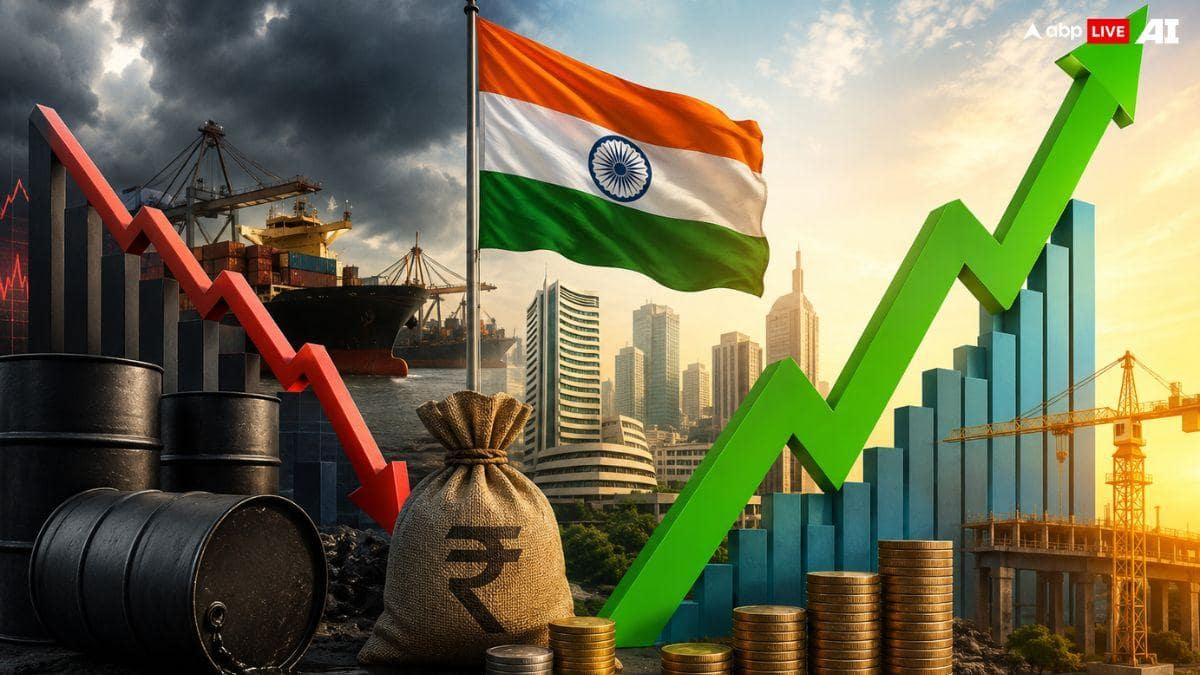
Nothing quite augurs for 7 per cent-plus growth for India in financial year 2025-26, going by the current indicators. Foreign portfolio investors (FPIs) continue withdrawing from Indian markets, resulting in net outflows of $7.6 billion in April. A depreciating currency amid weak capital inflows has kept the rupee under pressure, while input cost pressures have increased significantly for producers, which could drag GDP growth and push up retail inflation. So, while a slew of global rating agencies and financial institutions have lowered their growth projections for India in the current fiscal, the Government and domestic stakeholders remain firm on a resilient 7.4 per cent growth estimate for 2025-26. While ICRA projects year-on-year GDP growth at 7.0 per cent in Q4 2025-26 and 6.2 per cent in FY27, CRISIL, which has revised its India economic outlook as risks to resilience rise, now expects India’s GDP to grow 6.6 per cent and retail inflation to average 5.1 per cent. Research from BMI (a Fitch Solutions company) expects India to grow 7.7 per cent in FY2025/26 and 6.7 per cent in FY2026/27. The Asian Development Bank (ADB), however, projects India’s GDP to ease to 6.9 per cent in fiscal year 2026 from 7.6 per cent in FY2025, while Moody’s Ratings has cut India’s GDP growth forecast for 2026 by 0.8 percentage points to 6 per cent, citing weak private consumption, slower capital formation and industrial activity. Slower Industrial and Services Activity Raises Concerns A slower expansion across the industrial sector, which saw 7.3 per cent growth in Q4 2025-26 against more than 9 per cent growth in Q3 2025-26, as well as a modest uptick in the services sector, which grew 8.5 per cent in Q4 2025-26 against 9.5 per cent in Q3 2025-26, is expected to have moderated GDP growth between these quarters. The performance of most trade and transport-related indicators, such as port cargo traffic, domestic air passenger and freight traffic, and GST e-way bill generation, eased in Q4 2025-26 vis-à-vis Q3 2025-26, partly owing to disruptions caused by the West Asia crisis. Aditi Nayar, Chief Economist, Head – Research & Outreach, ICRA, notes that a slower rise in manufacturing volumes, contraction in exports, and nascent signs of margin pressure amid the West Asia fallout may have weighed on industrial gross value added (GVA) growth during the quarter. Slowing global growth and shipping disruptions triggered by the West Asia conflict led to shipments of textiles, pharmaceuticals, and gems and jewellery contracting in Q4 2025-26. The output of leather and related products contracted by 4.6 per cent month-on-month in March 2026 (versus an average of +3.9 per cent month-on-month during March 2022-2025), given the sector’s high dependency on petrochemical derivative imports from the region. Based on available trends, ICRA projects manufacturing GVA growth to ease to 8-9 per cent in Q4 2025-26, falling to a single digit after a gap of five quarters. As per ICRA estimates, GDP growth is pegged at 7.5 per cent in 2025-26, marginally lower than the National Statistical Office’s (NSO) second advance estimate of 7.6 per cent for the fiscal. Also Read : Airfares, LPG, Solar Panels: 5 Financial Changes To Watch From June Crude Oil Remains the Biggest Risk India Ratings and Research (Ind-Ra) projects GDP growth at 6.7 per cent year-on-year in FY27, attributing higher fuel prices arising from uncertainty linked to the West Asia conflict as a key risk factor. “A USD10/bbl increase in crude oil prices could reduce GDP growth by 44bp,” says Megha Arora, Director – Economics, Ind-Ra. The agency’s baseline forecast assumes oil at $95/bbl and expects average prices of $110/bbl in Q1FY27, $100/bbl in Q2FY27, $90/bbl in Q3FY27 and $80/bbl in Q4FY27. “If oil prices average $120/bbl, the growth could decline to 5.6 per cent,” warns Arora. Crude Price Shock and Macro Stability The international price of crude oil (Indian basket) stood at $114.5/bbl in April 2026 following the escalation of the West Asia conflict and resulting supply disruptions. Thereafter, prices eased by 6.8 per cent sequentially to $106.7/bbl during May 1-15, 2026, although they remained above the $100/bbl mark, posing a threat to India’s macroeconomic stability because of the country’s dependence on imports for key energy products and fertiliser inputs. “We now assume crude oil prices to average at $95/bbl in FY2027, against our prior estimate of $85/bbl, given the ongoing stickiness in prices amid the stalemate in West Asia. Consequently, we have pared our baseline forecast for FY2027 GDP growth (at constant 2022-23 prices) to 6.2 per cent from the 6.5 per cent expected earlier,” Nayar added. Given the uncertainty surrounding the conflict’s resolution, elevated energy prices over an extended period pose downside risks to growth, including weaker investment demand, pressure on corporate profitability and dampened consumer sentiment. Also Read : Scanned A Fake QR Code And Lost Money? Here Is What You Must Do Right Now Capex Cuts Could Further Hurt Growth A major domestic dampener to GDP is weaker-than-expected capital expenditure, particularly by the Government as it seeks to manage fiscal risks. A 10 per cent reduction in government capex from the base case could pull FY27 GDP growth down to 6.0 per cent, according to Arora. The Government may defer capex spending to control the fiscal deficit. Significantly, Ind-Ra notes Prime Minister Narendra Modi’s appeal for austerity by both the Government and citizens. If this translates into a 10 per cent reduction in government capex by both Union and state governments, Gross Fixed Capital Formation (GFCF) could slow to 5.2 per cent and drag GDP growth down to 6.0 per cent in FY27. Rural Demand Shows Early Signs of Stress Rural demand, a key growth indicator, weakened towards the end of Q4 FY26 as sentiment took a hit. According to the RBI’s Rural Consumer Confidence Survey (RCCS), the Current Situation Index (CSI) for rural and semi-urban households declined sharply in March 2026 following the escalation of West Asia tensions, reflecting concerns around gas and fertiliser availability and the potential emergence of El Niño conditions. The index had remained in positive territory until January 2026 before reversing after six consecutive survey rounds. Interestingly, FMCG players highlighted that rural demand remained steady in Q4 FY2026. However, margin visibility was mixed depending on raw material exposure, reliance on crude-linked inputs and the ability to pass on costs, factors that could weigh on demand sustainability in the near term. Why Some Agencies Remain Optimistic Research from BMI expects India to grow 7.7 per cent in FY2025/26 and 6.7 per cent in FY2026/27. While the FY2025/26 forecast represents a 0.1 percentage point upward revision from the previous estimate, the FY2026/27 outlook remains unchanged. One reason is the assessment that the impact of last year’s tax reforms will fade by Q2 2026. This trend is already visible in vehicle registration data, which showed new registrations growing 9 per cent year-on-year in April after increasing 23 per cent in Q1. Higher income levels generated by last year’s strong GDP growth are also expected to support imports during FY2026/27. Government Bets on Investment Momentum The Government is looking to investment trends for support. Investment activity remained largely favourable in Q4 FY2026, with project completion reaching a record Rs 4.2 trillion, compared with Rs 2 trillion in Q3 FY2026 and Rs 2.8 trillion in Q4 FY2025. Additionally, capital spending by the Centre and 26 state governments rose by 12 per cent year-on-year during January-February FY2026. Also Read : Gold Silver Rate Today (May 29): Prices Fall Nearly 1%, Check Latest Rates In Delhi, Mumbai, Chennai, More Support Measures for Industry and Trade The Government’s optimism is also supported by measures aimed at helping businesses weather the crisis. The Emergency Credit Line Guarantee Scheme 5.0 (ECLGS 5.0), approved by the Union Cabinet, covers both MSMEs and non-MSMEs with a targeted credit flow of Rs 2.55 trillion, including Rs 50 billion earmarked for airlines. The scheme provides 100 per cent guarantee coverage for MSMEs and 90 per cent for non-MSMEs, helping borrowers manage liquidity pressures arising from the West Asia crisis. RBI Dividend Provides Fiscal Cushion Nomura economists Aurodeep Nandi and Sonal Varma point out that the RBI transferred a record Rs 2.87 trillion dividend (0.75 per cent of GDP) for FY26, compared with Rs 2.69 trillion in the previous year. “This has broadly been in line with our expectations, and the estimates in the FY27 Union Budget, but short of some market expectations of a bumper transfer of Rs 3.0 trillion,” they said. This provides the Government with an important buffer against fiscal risks. Devendra Kumar Pant, Chief Economist, Ind-Ra, believes the surplus transfer will strengthen the RBI’s ability to intervene in financial markets amid evolving domestic and global macroeconomic conditions. Weather, Rupee and the Road Ahead Policymakers and economists continue to believe that while India remains vulnerable to high crude oil prices and deficient rainfall, vulnerability to rainfall has reduced over the years because of higher irrigation coverage, improved agricultural extension services, a larger share of allied agricultural activities and the increasing contribution of services to GVA. If rainfall distribution between June and September remains close to normal, risks to agricultural GVA could be contained. Experts expect the rupee to average 93.5 per US dollar in March 2027, compared with 92.8 in March 2026, amid heightened volatility. Although India’s external vulnerability has increased because of a widening current account deficit and foreign capital outflows, many analysts expect the rupee to strengthen from current levels towards the end of the fiscal year if geopolitical tensions ease. This would be consistent with historical currency cycles, where periods of sharp weakness are often followed by a gradual correction.

Airfares, LPG, Solar Panels: 5 Financial Changes To Watch From June

With May drawing to a close and June just days away, several key financial and policy changes are set to come into effect across the country from June 1, 2026. The upcoming changes are expected to impact households, banking customers, air travellers and consumers alike, with revisions linked to LPG cylinder prices, air turbine fuel (ATF), banking rules and solar panels among the major developments. Here are five major changes taking effect from June 1: LPG Cylinder Prices Likely To Be Revised Oil marketing companies revise LPG cylinder prices on the first day of every month, and another revision is expected on June 1. Cylinder prices have witnessed increases in recent months amid the ongoing Middle East crisis. At present, a 14-kilogram domestic LPG cylinder in Delhi costs Rs 913, while a 19-kilogram commercial cylinder is priced at Rs 2,078. ATF Price Revision May Impact Air Travel Costs Apart from LPG, oil companies also revise air turbine fuel (ATF) prices every month. Changes in ATF prices directly affect airline operating costs and can influence airfares. The ongoing tensions in West Asia have significantly impacted jet fuel prices in recent months. Currently, the price of ATF in Delhi stands at Rs 104,927 per kilolitre. HDFC Bank To Change Rules For Cash Deposits HDFC Bank will implement revised rules for current accounts and certain other accounts from June 1, 2026. According to information available on the bank’s website, the bank will introduce new limits and charges for deposits involving small denomination notes and coins. Until now, there was no monthly limit on such deposits, although a charge of around 4 per cent was levied on note deposits and approximately 5 per cent on coin deposits. Under the revised rules: The monthly limit for notes of Rs 20 or less will be Rs 10,000 The monthly limit for coin deposits will be Rs 5,000 Deposits beyond these limits will attract an additional 2 per cent charge. New Solar Panel Rules To Take Effect Another major change from June 1 relates to solar panels. The Approved Model and Manufacturer List (ALMM List-II) for solar panels will come into effect from June 1, 2026. Under the revised framework, only solar modules and cells included in the approved list will be permitted for use in government schemes and subsidised projects. The move is aimed at ensuring quality standards, though there are concerns that solar panel prices could rise following implementation. Multiple Bank Holidays Scheduled In June June will also see several bank holidays across states and cities. According to the RBI’s bank holiday calendar, banks will remain closed on second and fourth Saturdays, Sundays, and on June 15, 25, 26, 29 and 30 in various parts of the country due to occasions including Muharram and Sant Guru Kabir Jayanti. ALSO READ: Can India Still Grow Above 7%? What Economists And Rating Agencies Are Saying However, holiday schedules may differ from state to state. Online banking services will continue to remain available throughout the holiday period. ALSO READ: Buying Insurance Stocks? These Key Metrics Matter More Than Premium Growth

Buying Insurance Stocks? These Key Metrics Matter More Than Premium Growth

Insurance is a sector where headline growth can attract investors. A company may report premium income, wider distribution and policy sales, but the key question is whether this growth creates durable value. Insurance is not like a business where revenue today turns into profit. An insurer collects premiums now and may pay claims much later. Hence, investors must study growth, risk selection, retention, claims experience and capital strength. Premium Growth: The Starting Point Premium growth shows how fast an insurer is expanding. In life insurance, investors track new business premium, renewal premium and annualised premium equivalent. In general insurance, gross written premium is followed. However, premium growth alone can mislead. A company can grow aggressively by underpricing products, paying higher commissions or entering risky segments. This may improve market share, but claims and expenses can damage profitability later. Therefore, premium growth should only answer whether the company is scaling. It does not show whether growth is healthy. Embedded Value: The Worth Already Built Embedded value is among the most important metrics for life insurers. It represents adjusted net worth plus the present value of future profits expected from existing policies. This is useful because life insurance policies create value over many years. A policy sold today may generate renewal premiums and profits for a long period. Traditional accounting may not capture this future profit stream immediately. Embedded value helps investors understand the value already built into the existing book. Investors often compare market capitalisation with embedded value through the price-to-embedded value ratio. A higher ratio may show that the market expects strong growth. A lower ratio may indicate undervaluation or concerns around margins, persistency or product mix. Still, embedded value should not be read blindly. Assumptions matter. Also Read : Scanned A Fake QR Code And Lost Money? Here Is What You Must Do Right Now VNB and VNB Margin: Profitability of New Business Value of new business, or VNB, measures the expected future profit from new policies sold during a period. Premium growth tells us how much business was sold, but VNB tells us how profitable that business may be. VNB margin shows new business profitability. Two insurers may report similar premium growth, but their value creation can be different. One may sell more protection products, which generally carry better margins. Another may sell more low-margin savings products. Hence, investors should ask whether the insurer is selling profitable policies, not just more policies. Persistency Ratio: Are Customers Staying? Insurance is a long-term business, so customer retention is critical. Persistency ratio shows how many policyholders continue paying premiums after buying a policy. The 13th-month ratio shows retention after the first year, while the 61st-month ratio reflects stickiness. High persistency indicates trust, suitable product selling and future cash flows. Weak persistency may point to mis-selling, poor customer experience or unsuitable products. Since insurers spend heavily on acquiring customers, early policy lapses can hurt profitability. Combined Ratio: Key Metric for General Insurance For general insurers, the combined ratio is one of the most important indicators. It combines the claims ratio and expense ratio, showing whether the insurer is making an underwriting profit. A combined ratio below 100 per cent means the insurer earns more from premiums than it spends on claims and expenses. A ratio above 100 per cent means underwriting losses. Some companies may still report profits because of investment income, but depending too much on investment income is not ideal. A strong general insurer should show underwriting discipline. The claims ratio shows how much of the premium is used to pay claims. A high claims ratio may suggest weak pricing or poor risk selection. The expense ratio shows spending on commissions, operations and distribution. If expenses remain high, premium growth may not convert into profits. Also Read : Gold Silver Rate Today (May 29): Prices Fall Nearly 1%, Check Latest Rates In Delhi, Mumbai, Chennai, More Solvency Ratio: Strength Behind the Promise Insurance is built on trust. Customers pay premiums because they expect the insurer to honour claims in the future. The solvency ratio measures whether the company has enough capital to meet obligations. A comfortable solvency ratio gives confidence during stress periods. If solvency weakens, the company may need to raise capital, reduce risk exposure or slow growth. Fast premium expansion without capital strength can become risky. Product Mix and Distribution Quality Not all insurance products are equally profitable. In life insurance, protection, savings, annuity and unit-linked products have different margins and risks. In general insurance, motor, health, fire, crop and commercial lines behave differently across cycles. Distribution also matters. Bancassurance provides scale through branches. Agency channels build relationships. Digital channels may reduce costs, but require execution and trust. A good insurer should grow while maintaining a healthy product mix. Final Checklist for Investors When evaluating insurers, investors should avoid judging them only by premium growth. For life insurers, embedded value, VNB, VNB margin, persistency, solvency and product mix are crucial. For general insurers, combined ratio, claims ratio, expense ratio, solvency and investment income quality deserve attention. The best insurance businesses price risk sensibly, retain customers, control claims, manage expenses and maintain capital strength. In insurance, the smarter question is not how much premium the company collected. It is how much long-term value it created from the risk accepted.   (Disclaimer: This article uses information originally published by Dalal Street Investment Journal (DSIJ). The views expressed are those of the original authors and not necessarily of ABP Network Pvt. Ltd. This content is provided for general informational and educational purposes only and should not be construed as investment, financial, legal or tax advice. Readers are advised to conduct their own research and/or consult a qualified financial advisor before making any investment decisions. This content is for informational purposes only and should not be treated as investment advice. ABP Network, its employees and associates shall not be responsible or liable for any losses or damages arising directly or indirectly from the use of or reliance on this article or any information contained herein.)

Can A Falling Rupee Boost Your Returns? How International Mutual Funds Work

Most investors closely track stock markets. Very few track currencies. Yet, currency movements can quietly influence your investment returns in ways many people fail to notice. What if a part of your portfolio could benefit not just from market performance, but also from the movement of the rupee itself? That is exactly where international Mutual Funds become interesting. Think about it. There are phases when Indian markets turn volatile, sentiment weakens, and domestic portfolios struggle to generate meaningful returns. Yet, some investors still see a part of their portfolio holding steady. In many cases, the hidden factor behind that resilience is not stock selection alone. It is currency movement. When you invest through international mutual funds, your money is typically converted into foreign currencies, most commonly the U.S. dollar. This means your returns depend on two things: the performance of global markets and the movement of the exchange rate. Here is where things become interesting for Indian investors. How Currency Movement Can Enhance Returns One of the lesser-known advantages of international mutual funds is the role currency movement can play in boosting returns. When Indian investors allocate money to global funds, the investment is usually linked to foreign currencies such as the U.S. dollar. Over long periods, the Indian rupee has gradually weakened against the dollar, and this trend has often worked in favour of investors holding international assets. Consider this example. Suppose you invested Rs 1 lakh in an international mutual fund when the dollar was trading at Rs 75. Your investment effectively converts into around 1,333 dollars. Even if global markets remain flat and the investment value in dollar terms does not rise, a change in the exchange rate can still impact returns. If the dollar later appreciates to Rs 85, the value of your investment increases to over Rs 1.13 lakh in rupee terms purely because of currency movement. Now combine this with actual market gains. If an international fund generates an 8 per cent annual return in dollar terms while the rupee weakens by another 3 per cent annually, the effective return for an Indian investor can move closer to 11 per cent. Over long investment horizons, this additional currency-led return can significantly enhance overall wealth creation through compounding. Diversification Beyond Indian Markets International mutual funds are not only about currency advantage. They also offer diversification beyond Indian markets. Indian equity markets are heavily concentrated in sectors like financials, energy, and IT services. Global markets open doors to industries and businesses that are either underrepresented or absent in India. This includes global technology leaders, semiconductor companies, advanced healthcare innovators, and multinational consumer brands. It also helps investors reduce dependence on a single market cycle. There have been several periods when Indian markets moved sideways while global markets delivered stronger performance. During such phases, international exposure can bring balance and stability to the portfolio. For investors seeking long-term wealth creation, this diversification can become an important risk-management tool. Also Read : Jet Fuel Shock Hits Airlines: Air India, IndiGo To Slash Nearly 250 Flights Daily From June Currency Does Not Always Work in Your Favour That said, investors should avoid treating international investing as a short-term currency bet. Exchange rates are influenced by inflation, interest rates, geopolitics, and global liquidity conditions. Predicting short-term currency movement consistently is extremely difficult, even for economists. There will be periods when the rupee strengthens against the dollar. In such cases, currency movement can reduce your effective returns in rupee terms even if global markets perform well. For example, if your international investment earns 10 per cent in dollar terms but the rupee appreciates sharply during the same period, your final rupee return may be lower. The smarter approach is to look at international mutual funds as a long-term diversification tool rather than a tactical opportunity. Understanding the Taxation Taxation is another aspect investors should understand carefully. Most international mutual funds in India are not treated as equity-oriented funds for tax purposes. If held for less than two years, gains are taxed as per the investor’s income tax slab. If held for more than two years, long-term capital gains are taxed at 12.5 per cent without indexation benefits. While this may appear less attractive compared to domestic equity taxation, investors should evaluate post-tax returns in totality. The combined impact of global market growth and currency depreciation can still deliver competitive long-term outcomes. How Much Allocation Makes Sense? So, how much exposure should investors consider? A commonly recommended allocation is around 10 to 15 per cent of the equity portfolio. This provides meaningful diversification without reducing domestic exposure significantly. Younger investors with longer investment horizons may prefer slightly higher allocations, while conservative investors may opt for lower exposure. The objective is not to replace Indian equities. It is to complement them. Also Read : Scanned A Fake QR Code And Lost Money? Here Is What You Must Do Right Now   The Final Takeaway In today’s interconnected world, limiting investments to a single geography may mean missing out on opportunities shaping the global economy. International mutual funds allow investors to participate in innovation, global growth, and currency diversification through a single investment route. The real question, then, is not whether global investing carries risks. Every investment does. The more important question is this: can a long-term portfolio truly remain diversified without looking beyond domestic markets?  (Disclaimer: This article uses information originally published by Dalal Street Investment Journal (DSIJ). The views expressed are those of the original authors and not necessarily of ABP Network Pvt. Ltd. This content is provided for general informational and educational purposes only and should not be construed as investment, financial, legal or tax advice. Readers are advised to conduct their own research and/or consult a qualified financial advisor before making any investment decisions. This content is for informational purposes only and should not be treated as investment advice. ABP Network, its employees and associates shall not be responsible or liable for any losses or damages arising directly or indirectly from the use of or reliance on this article or any information contained herein.)  

Tata Tiago Petrol Vs CNG: The Cost Difference May Surprise You

The new Tiago comes in petrol and CNG avatars while in this article we will see which one makes more sense for you. The new Tiago comes with an EV powertrain, petrol and CNG while the CNG and petrol versions would confuse buyers in terms of running costs. With petrol prices sky high, CNG is now the new diesel. In the Tiago petrol you get the 1.2-litre 3-cylinder naturally aspirated petrol with 86bhp. In the CNG version, there is direct start and the power on offer is slightly less at 75bhp. Interestingly the CNG and petrol versions come with manual and AMT options with even paddle shifters on offer on the CNG AMT. The petrol has an efficiency of under 20kmpl while the CNG has 26.49 km/kg. Also Read : Tiago EV Facelift Launched Under Rs 5 Lakh: Time To Skip Petrol Cars? Running Costs, Features and Verdict In terms of running costs, the new Tiago CNG is much cheaper than the petrol while you can get it in AMT now as well. Price wise you do end up paying more than a lakh over the petrol model but you will make up the cost with the CNG quickly. In terms of features, the new Tiago now comes with a 360 degree camera, blind view monitor, 6 airbags, rear ac vents and more. That said, you cannot get the CNG on the topend trim which is Creative+ as it is limited to Creative only. With the CNG, the performance is less than petrol but you will get a much cheaper running cost which is crucial for a car like this especially during times like these. Also Read : ABP Live Exclusive: Honda Gears Up For New EV Launch, More Imported Cars Coming To India

Viral Video Sparks Outrage After People Pluck Feathers From Injured Peacock

A heartbreaking video is going viral on social media, leaving people shocked and deeply saddened. The clip shows India’s national bird, a peacock, lying injured on the roadside while some people nearby are seen plucking its beautiful feathers instead of helping the suffering bird. The incident has sparked outrage online, with many questioning humanity and demanding strict action against those involved. The viral video reportedly shows a peacock that was badly injured after being hit by a vehicle. The bird appears unable to move and can be seen struggling in pain on the roadside. In such situations, people are generally expected to help the injured animal or inform the forest department and animal rescue teams. However, the actions seen in the video have left social media users furious. ALSO READ: Uber's New 'Drift' Experience In Japan Lets Tourists Ride In Iconic JDM Drift Cars People Started Plucking Feathers Instead Of Helping In the video, a crowd can be seen gathering around the injured peacock. Instead of trying to save the bird or arrange medical help, some individuals begin pulling out its colourful feathers. While one person is seen grabbing feathers directly from the peacock, others quickly collect them and walk away. No one in the clip appears to be making an effort to take the bird to a hospital or rescue centre. The disturbing visuals have triggered strong reactions online, with many users calling the act cruel and shameful. Social Media Users Express Anger After the video surfaced online, users across social media platforms strongly condemned the incident. Many called for strict punishment against the people involved. One user wrote, "Strict action should be taken against such people." Another commented, "Humanity is slowly disappearing. People cannot even show compassion to a suffering creature." A third user said, "What will they even do with those feathers? Taking advantage of a helpless animal’s pain is disgraceful." Several users also pointed out that the peacock’s life might have been saved if it had received medical treatment on time.

Toyota Urban Cruiser Ebella Priced At Rs 23.6 Lakh: How It Compares With eVitara

Toyota has revealed the price of its first EV and the Urban Cruiser Ebella is priced at Rs 23.6 lakh while only being available in one trim. The Ebella comes with the 61kwh battery pack only and comes with E3 grade as the price is announced only of that. The Ebella comes with a 61kwh battery pack with 189Nm. The car comes with ADAS, 8 year battery warranty, 360 degree camera, ventilated seats, sunroof and more. There are 5 colours and four dual tone ones. How Does It Compare With The eVitara? The big question is how the Ebella is priced against the eVitara? The Ebella is only available with one variant and it is significantly more expensive than the eVitara. The top-end eVitara is Rs 20 lakh while the Ebella is Rs 23.6 lakh. The eVitara meanwhile starts at Rs 15.9 lakh. The Ebella is also not available with BAAS like the eVitara as well. Also Read : Tiago EV Facelift Launched Under Rs 5 Lakh: Time To Skip Petrol Cars? We think the pricing is on the higher side and it remains to be seen if other variants would be available as well. The Ebella comes with one grade only while more trims will make it affordable while Toyota will mostly have one trim only being the fully loaded car. Features And Service Network The Ebella has distinctive design elements like the front-end while sharing interior with the eVitara which is much more affordable. Toyota also says that the Ebella comes with 500 plus BEV enabled touch points for service. Toyota has been the latest entrant to the growing EV space in India. Also Read : ABP Live Exclusive: Honda Gears Up For New EV Launch, More Imported Cars Coming To India

Fast & Curious: Uber Brings Real-Life Tokyo Drift Experience To Japan

Tokyo's legendary car culture is about to become far more accessible for travellers. Uber has introduced a new limited-edition experience called Uber Drift in Japan, giving visitors the chance to witness professional drifting from inside iconic Japanese performance cars. The offering marks the latest addition to Uber's global 'Go Anywhere' series and also serves as the company's first such experience in the Asia-Pacific region. Designed for tourists looking to explore Japan beyond traditional sightseeing, Uber Drift blends motorsport, local culture, and curated travel into a single half-day experience. ALSO READ: Chanel's Viral Barefoot Phantom Sandals Have Everyone Asking: ‘Is This Even A Shoe?' What Is Uber Drift? Uber Drift is built around one of Japan's most famous automotive traditions, drifting. Originating in the country during the 1970s, drifting involves drivers intentionally sliding cars sideways through corners while maintaining control at high speeds. Instead of arranging separate motorsport activities or navigating unfamiliar local circuits, travellers can now book the experience directly through the Uber app. The service is aimed at making Japan's underground-inspired car scene easier to access for international visitors. A Half-Day Motorsport Experience In Tokyo The experience begins with guests being picked up from their accommodation in Tokyo in an Uber Black van. From there, participants are transported to Mobara Twin Circuit, a well-known motorsport venue popular among drift enthusiasts. Once at the track, guests receive approximately 90 minutes of combined driving and ride sessions featuring classic Japanese Domestic Market (JDM) machines. The event is structured as a controlled circuit activity rather than an open-road experience. Nissan Silvia S15 And 180SX Among Featured Cars For the drifting sessions, Uber has partnered with Formula Drift-licensed professional drivers. Participants ride in the passenger seat while the experts perform tandem drift runs around the circuit. The lineup includes specially prepared JDM cars such as the Nissan Silvia S15 and Nissan 180SX, both widely recognised within Japan's tuning and drift communities. Group Bookings And Safety Rules Uber Drift reservations are available as private bookings for groups ranging from one to four people. The laps included in the package can either be divided among participants or used by a single guest. To take part, visitors must follow track safety requirements. Uber has stated that guests are required to wear long-sleeved clothing, full-length trousers, and closed-toe footwear. Helmets will be provided at the venue. Uber Drift Price And Availability Bookings for Uber Drift opened on May 27, 2026, while the experience itself will run from June 3 to July 1, 2026. Uber has priced the package at 30,000 JPY (approximately Rs 18,179) per group, regardless of whether one person or four people participate. Availability will remain limited, with only four groups scheduled per day.

ABP Live Doc Talk: Children Are Developing Fatty Liver Earlier, Here's What Parents Should Pay Attention To

Fatty liver disease, now increasingly called Metabolic Dysfunction-Associated Steatotic Liver Disease (MASLD), is no longer limited to adults. More children and teenagers are being diagnosed with fatty liver, raising concern among doctors and parents alike. ALSO READ: World Digestive Health Day 2026: 8 Warning Signs Of Gut Problems That May Signal A Bigger Problem Factors That Affect Fatty Liver In Children Unhealthy Diets and Childhood Obesity Are Major DriversThe primary reason is the sharp rise in childhood obesity which is due to regular consumption of calorie-dense processed foods, fast food, sugary snacks, soft drinks, and packaged juices. Sedentary Lifestyle and Excessive Screen TimeA sedentary lifestyle is another major factor. Outdoor play has reduced significantly, while screen time on mobile phones, tablets, television, and gaming devices has increased. Physical inactivity contributes to weight gain and insulin resistance, both strongly linked to fatty liver. Poor Sleep Habits Can Affect Liver HealthPoor sleep habits also play a role. Irregular sleep schedules, late-night gadget use, and inadequate sleep can disturb metabolism and appetite-regulating hormones, indirectly promoting weight gain and fat accumulation in the liver. Genetic and Maternal Health FactorsSome children may also have a genetic tendency to develop metabolic problems, making them more vulnerable even if they are not severely overweight. Children born to mothers with obesity or diabetes may also carry higher metabolic risks. Medical conditions such as type 2 diabetes, high cholesterol, insulin resistance, and adolescent PCOS can further increase the chances of developing fatty liver. ALSO READ: Struggling With Period Pain In The Summers? Experts Decode The Heatwave-Menstruation Link Fatty Liver Often Remains Silent In Early Stages The challenge is that fatty liver in children often remains silent, causing no obvious symptoms in early stages. It may only be detected during routine blood tests showing abnormal liver enzymes or imaging studies. Early Lifestyle Changes Can ReverseiThe Condition The good news is that early fatty liver can often be reversed. Healthy eating, reducing sugary drinks, encouraging regular physical activity, maintaining proper sleep, and controlling weight can significantly improve liver health. Why Early Awareness And Intervention Matter Fatty liver in children should not be ignored as a simple lifestyle issue. It is an early warning sign of future health problems, including diabetes, heart disease, and advanced liver damage. Early awareness and timely intervention are essential to protect a child’s long-term health. Disclaimer: The information provided in the article is shared by experts and is intended for general informational purposes only. It is not a substitute for professional medical advice, diagnosis, or treatment. Always seek the advice of your physician or other qualified healthcare provider with any questions you may have regarding a medical condition.

World Digestive Health Day 2026: 8 Warning Signs Of Gut Problems That May Signal A Bigger Problem

Every year on May 29, the world observes World Digestive Health Day to spread awareness about digestive wellness and encourage people to take gut health seriously. The global campaign is organised by the World Gastroenterology Organisation and focuses on prevention, early diagnosis, and better understanding of digestive disorders that affect millions worldwide. ALSO READ: Struggling With Period Pain In The Summers? Experts Decode The Heatwave-Menstruation Link World Digestive Health Day 2026 Theme The theme for World Digestive Health Day 2026 is 'Chronic Diarrhea: Don’t Flush the Signs Away.' The campaign highlights the importance of recognising persistent digestive symptoms early and removing the stigma around discussing gut-related issues. Health experts say conditions like Irritable Bowel Syndrome and Ulcerative Colitis often remain undiagnosed because many people ignore warning signs for too long. In today’s fast-paced lifestyle, irregular eating habits, processed food, stress, poor sleep, and lack of physical activity are increasingly affecting digestive health. While occasional stomach discomfort may seem normal, persistent symptoms can indicate deeper gut-related problems that should never be ignored. Warning Signs Of Gut Health Issues Persistent Abdominal Pain:Ongoing stomach pain or repeated abdominal discomfort may point toward underlying digestive issues. If the pain keeps returning or lasts for a long time, it is important not to dismiss it as a minor problem. Chronic Constipation Or Diarrhoea:Frequent constipation or diarrhoea can signal inflammation, infections, or digestive disorders affecting the gut. Persistent bowel changes should be monitored carefully, especially if symptoms continue for several days or weeks. Persistent Bloating And Excessive Gas:Occasional bloating is common, but constant bloating and excessive gas may indicate an imbalance in the digestive system. These symptoms can sometimes reflect poor digestion or underlying gut sensitivity. Frequent Heartburn Or Acid Reflux:Repeated episodes of heartburn or acid reflux may be linked to digestive conditions such as gastroesophageal reflux disease. Ignoring these symptoms for a long time may worsen discomfort and digestive health. Blood In Stool:Blood in stool should never be ignored. Experts warn that it may indicate ulcers, colorectal issues, or other serious digestive conditions that require immediate medical evaluation. Excessive Fatigue:Chronic tiredness may sometimes be connected to poor gut health because the digestive system plays a major role in nutrient absorption. If the body is not absorbing nutrients properly, it can lead to constant fatigue and weakness. Changes In Appetite:A sudden loss of appetite or noticeable changes in eating habits can sometimes be an early sign of digestive imbalance. Listening to the body’s signals can help detect gut-related concerns earlier. Unexplained Skin Problems:Health experts say gut health and skin health are closely connected. Persistent acne, eczema, rashes, or other unexplained skin issues may sometimes reflect underlying digestive imbalances affecting the body internally. [Disclaimer: The information provided in the article is intended for general informational purposes only. It is not a substitute for professional medical advice, diagnosis, or treatment. Always seek the advice of your physician or other qualified healthcare provider with any questions you may have regarding a medical condition.]

Chandrayaan-2 finds strong evidence for ice in 'doubly-shadowed' lunar craters

India's Chandrayaan-2 has detected strong evidence of ice buried deep within permanently shadowed craters at the Moon's south pole. This groundbreaking discovery, made using radar data, could be crucial for future human missions, offering a vital local resource for drinking water and rocket fuel. The findings highlight the south pole's significance in the ongoing space race.

//