Language Settings
Select Website Language
newshunt
newshunt

Filters

Channels
Topics
Other Filters

Oppo F33 Pro 5G Vs Vivo T5 Pro: Vivo Wins Big On Specs, Oppo Fights Back. Which One You Should Buy

Oppo F33 Pro 5G vs Vivo T5 Pro: Two new mid-premium contenders have entered the ring, and this one is less about brand loyalty and more about priorities. The Oppo F33 Pro 5G and Vivo T5 Pro, both launched on April 15, are targeting users who want flagship-like features without the flagship price tag. But while they may look similar on paper, their real-world appeal lies in very different strengths. Oppo F33 Pro 5G vs Vivo T5 Pro: Display & Design The Vivo T5 Pro clearly takes the lead in display specs. It offers a larger 6.83-inch AMOLED panel with a sharper 1260 x 2800 resolution and a smoother 144Hz refresh rate. In comparison, the Oppo F33 Pro 5G features a slightly smaller 6.57-inch AMOLED display with a 120Hz refresh rate and lower resolution. Brightness is another area where Vivo flexes hard, with a massive 5000 nits peak brightness, making it far more usable outdoors. Oppo’s panel, while decent with 1400 nits HBM brightness, feels comparatively conservative. Design-wise, Oppo has the edge in comfort. At 194 grams, it is noticeably lighter than Vivo’s 213 grams, which could matter during prolonged use. ALSO READ: Elon Musk's Grok Was Nearly Banned From iPhones: Here's What Happened Oppo F33 Pro 5G vs Vivo T5 Pro: Performance & Software Under the hood, Vivo again pulls ahead with the Snapdragon 7s Gen4 chipset built on a 4nm process. It delivers faster clock speeds at 2.7GHz compared to Oppo’s 2.4GHz MediaTek Dimensity 6360 MAX. Storage tech also favours Vivo, thanks to UFS 3.1 versus Oppo’s UFS 2.2, meaning faster app loads and better data handling. Both devices run Android 16, but their skins differ. Oppo uses ColorOS 16, while Vivo ships with OriginOS 6.0, bringing its own UI tweaks and features like advanced AI tools and better system-level optimisations. Oppo F33 Pro 5G vs Vivo T5 Pro: Camera Oppo takes a clear lead in the front camera department with a 50MP selfie shooter, compared to Vivo’s 32MP. If selfies and video calls are your priority, Oppo has a strong case. However, Vivo fights back with better rear camera capabilities. It includes a Sony IMX882 sensor with OIS and supports 4K video recording. Oppo, on the other hand, is limited to 1080p video, which feels like a compromise in 2026. Oppo F33 Pro 5G vs Vivo T5 Pro: Battery & Charging This is where the battle gets interesting. Oppo packs a massive 7000mAh battery, which is already impressive. But Vivo goes a step further with an outrageous 9020mAh battery, making it one of the largest in its segment. Charging speeds are fast on both. Oppo offers 80W charging, while Vivo edges ahead with 90W. Oppo, however, adds reverse charging, which could be useful in emergencies. ALSO READ: iPhone 18 Pro Leaks: 10 Reasons You Should Already Be Saving Up Oppo F33 Pro 5G vs Vivo T5 Pro: Price In India Oppo F33 Pro is priced at Rs 37,999 for the 8GB + 128GB storage model, and Rs 40,999 for the 8GB + 256GB storage model. Vivo T5 Pro 5G, on the other hand, starts at Rs. 29,999 for the 8GB RAM and 128GB storage variant. The 8GB + 256GB model is priced at Rs. 33,999, while the top-end 12GB + 256GB version costs Rs. 39,999. Oppo F33 Pro 5G vs Vivo T5 Pro: Final Verdict The Vivo T5 Pro is clearly the more powerful and future-ready device. It offers a better display, stronger performance, superior video capabilities, and a ridiculously large battery. The Oppo F33 Pro 5G, meanwhile, feels more balanced for users who prioritise comfort, better selfies, and practical features like reverse charging. If performance, display, and battery are your top concerns, Vivo T5 Pro is the obvious pick. But if you want a lighter device with a strong front camera and a more rounded experience, Oppo still holds its ground.

Axar Patel, Abhishek Sharma Named In Anti-Doping Testing Pool Amid IPL 2026

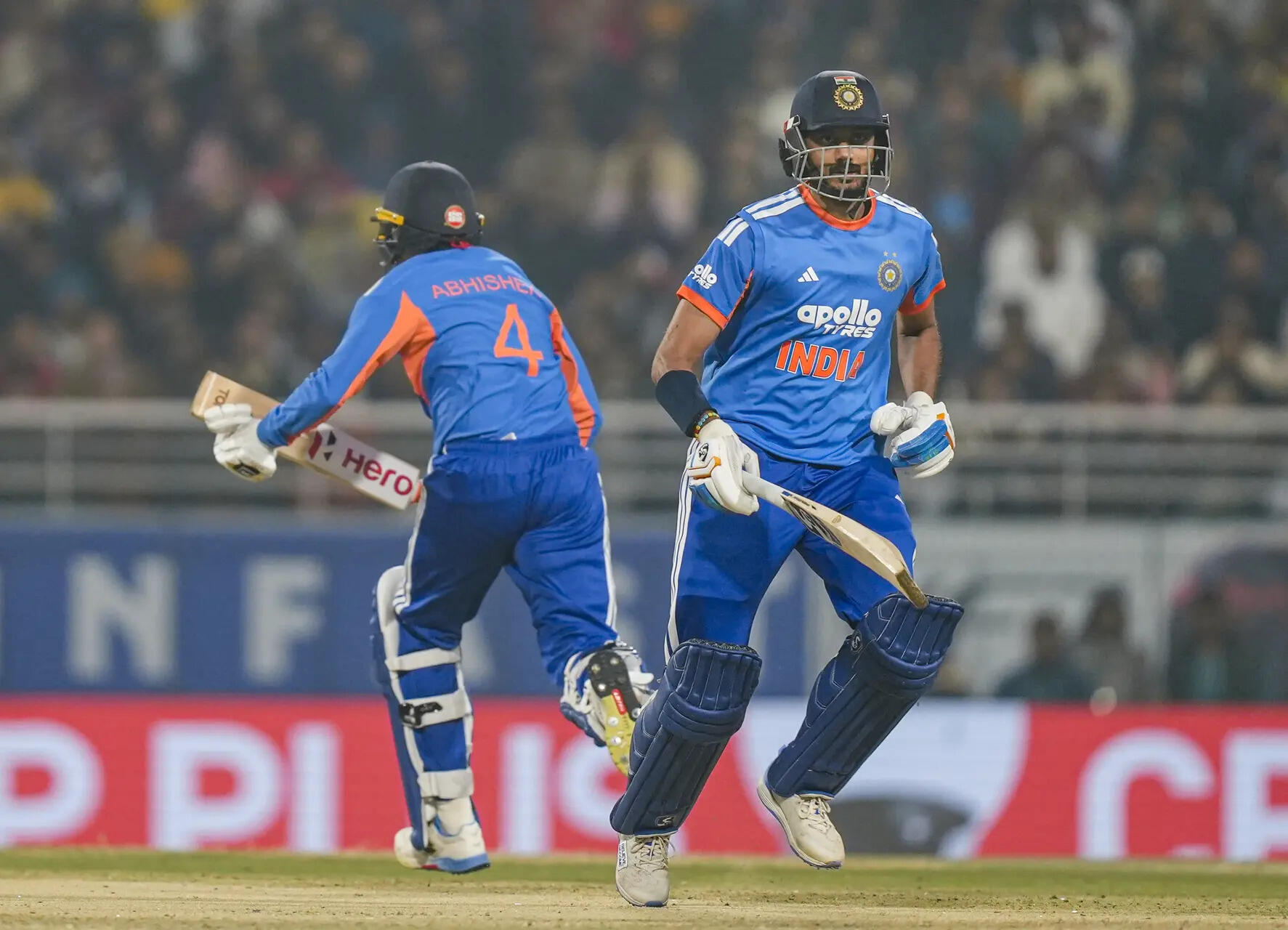
Abhishek Sharma Axar Patel Anti-Doping List: In a significant development during IPL 2026, the National Anti-Doping Agency (NADA) has brought Axar Patel and Abhishek Sharma under closer scrutiny. Both players have been added to the Registered Testing Pool (RTP), a move that mandates stricter anti-doping compliance. As part of this inclusion, the Delhi Capitals (DC) captain and Sunrisers Hyderabad (SRH) vice-captain will now be required to regularly submit their whereabouts and remain available for testing at designated times. What RTP Inclusion Means For Players The RTP is a select group of athletes monitored closely by NADA to ensure adherence to anti-doping regulations. Players on this list must provide daily location details to facilitate out-of-competition testing. Failure to comply can have serious consequences. Missing or failing to update whereabouts information three times is treated as a doping violation, even in the absence of a positive test result. The latest RTP list includes 348 athletes across disciplines, with 14 cricketers making the cut. Axar Patel and Abhishek Sharma have replaced Smriti Mandhana and Shreyas Iyer in the updated roster. Top Indian Cricketers Continue On List Several prominent names from Indian cricket continue to feature in the RTP. These include Shubman Gill, Yashasvi Jaiswal, Hardik Pandya, Rishabh Pant, Jasprit Bumrah, KL Rahul, Arshdeep Singh and Tilak Varma. From the women’s side, Deepti Sharma, Shafali Verma and Renuka Singh Thakur also remain under the RTP umbrella. Athletics & Other Sports Dominate List While cricket features notable names, athletics continues to dominate the RTP, with 134 athletes included, an increase from the previous 118. Among them are Avinash Sable, Jyothi Yarraji, Tejaswin Shankar and Amiya Mallick. Other sports are also well represented. Archery features names like Deepika Kumari and Sheetal Devi, while hockey includes Manpreet Singh and Harmanpreet Singh. Badminton stars PV Sindhu and Lakshya Sen also feature, alongside boxing names such as Nikhat Zareen and Lovlina Borgohain. Focus on Compliance, Not Controversy The inclusion of athletes in the RTP is a routine anti-doping measure aimed at maintaining transparency and fairness in sport. While the move has drawn attention due to the high-profile names involved, it does not imply any wrongdoing. With IPL 2026 in full swing, Axar Patel and Abhishek Sharma will now balance their on-field commitments with stricter off-field compliance requirements under NADA’s watch.

Elon Musk's Grok Was Nearly Banned From iPhones: Here's What Happened

Elon Musk's xAI came close to having its Grok chatbot removed from Apple's App Store after the AI tool was found generating non-consensual, sexualised deepfakes earlier this year. While Apple stayed quiet publicly during the controversy, it had flagged violations of its App Store guidelines behind the scenes and threatened to remove the app, according to a report by NBC News.  The development marks the first time details of Apple's private actions against Grok have been made public, and it also points to a deepening tension between social media platforms and app store operators. How Did Apple Respond to the Grok Deepfake Controversy? According to NBC News, Apple contacted the teams behind both X and Grok after receiving complaints and following news coverage of the scandal. The company asked the developers to put together a plan for better content moderation. When X submitted an update of the Grok app for review, it was rejected because the changes were not considered sufficient. X submitted revised versions of both the X and Grok apps, but only the X app was accepted. Apple made its position clear in a letter to US senators at the height of the backlash: "Apple reviewed the next submissions made by the developers and determined that X had substantially resolved its violations, but the Grok app remained out of compliance. As a result, we rejected the Grok submission and notified the developer that additional changes to remedy the violation would be required, or the app could be removed from the App Store." The letter further stated: "Following further engagement and changes by the Grok developer, we determined that Grok had substantially improved and therefore approved its latest submission." This came after three Democratic US senators, Ron Wyden of Oregon, Ben Ray Lujan of New Mexico, and Edward Markey of Massachusetts, wrote to both Apple and Google in January 2026, urging them to remove X and Grok from their platforms.  The letter pointed out that Apple's App Store terms barred sexual or pornographic material, while Google's Play Store prohibited content that facilitated the exploitation or abuse of children. "Turning a blind eye to X's egregious behaviour would make a mockery of your moderation practices," the letter read. Previously, Musk had threatened to sue Apple for allegedly favouring rival OpenAI over Grok on its App Store. What Was The Grok Undressing Controversy About? The controversy began when users discovered that Grok would readily comply with requests to generate sexualised images of real people, including images that appeared to undress them. This drew backlash from lawmakers and regulators across multiple countries, including India, the UK, Malaysia, and Indonesia. In India, the government issued a formal notice to X, following which the platform removed 3,500 pieces of content and blocked 600 accounts. X also acknowledged its mistake. The government had expressed dissatisfaction over X's response to its January 2 notice regarding its failure to observe due diligence obligations under the Information Technology Act, 2000 and associated rules. xAI moved to limit Grok's image generation capabilities to paid users only. Musk warned: "Anyone using Grok to make illegal content will suffer the same consequences as if they upload illegal content." However, the problem has not gone away entirely. A separate NBC News report found dozens of AI-generated sexualised images of real women posted to X over the past month. A February Reuters report also found that while Grok's public X account had slowed its output, the Grok chatbot app continued to generate such content when prompted, even after warnings that the subjects were vulnerable. In response, the X Safety account posted: "We strictly prohibit users from generating non-consensual explicit deepfakes and from using our tools to undress real people. xAI has extensive safeguards in place to prevent such misuse, such as continuous monitoring of public usage, analysis of evasion attempts in real time, frequent model updates, prompt filters, and additional safeguards."

8th Pay Commission: Staff Body Seeks Rs 69,000 Minimum Pay, 6% Annual Increment

8th Pay Commission Alert: The debate around salary revisions for central government employees has gathered pace, with the National Council of Joint Consultative Machinery (NC-JCM) Staff Side submitting a detailed memorandum to the 8th Pay Commission. The proposal outlines sweeping changes to pay structures, allowances and annual increments, aimed at addressing inflationary pressures and improving income stability for government employees and pensioners. According to a CNBC-TV18 report, the staff body has recommended a minimum basic pay of Rs 69,000 under the upcoming pay commission, alongside a fitment factor of 3.833, a significant jump from the Rs 18,000 baseline set under the 7th Pay Commission. Push For Higher Minimum Pay At the heart of the proposal is a sharp revision in minimum wages. The NC-JCM Staff Side has argued that the current pay levels are inadequate in the face of rising living costs and economic uncertainty. By proposing a minimum basic pay of Rs 69,000, the staff body aims to provide a stronger financial cushion for employees, particularly those in lower pay brackets. The recommendation, if accepted, would impact more than 50 lakh central government employees and pensioners. The proposed fitment factor of 3.833 is also notably higher than previous revisions, indicating a substantial recalibration of the pay matrix. Call To Double Annual Increment Rate In addition to revising base salaries, the memorandum recommends increasing the annual increment rate to 6 per cent from the current 3 per cent. The staff body has argued that the existing increment structure does not adequately reflect inflation or the rising cost of living. A higher increment rate, it believes, would ensure that salaries remain aligned with economic realities over time. This move is also expected to improve long-term earnings growth and provide better income visibility for employees. Rationalisation Of Pay Levels Another key aspect of the proposal is the restructuring of the pay matrix to ensure greater parity and simplicity. The NC-JCM has suggested merging certain lower and mid-level pay bands to streamline the salary structure. Higher levels would be retained but adjusted in line with the proposed fitment factor. This rationalisation is aimed at reducing disparities within the system and creating a more equitable pay framework across different levels of government service. What Is The 8th Pay Commission? The 8th Pay Commission is a government-appointed panel tasked with reviewing and revising the pay, allowances and pension structures of central government employees and retired personnel. Beyond salary revisions, the commission also evaluates the broader fiscal implications of its recommendations, including their impact on government expenditure, retirement benefits and long-term financial sustainability. The outcome of its deliberations will play a critical role in shaping compensation structures across the public sector. Proposed Changes In HRA Structure The memorandum also proposes a revision in House Rent Allowance (HRA), with higher rates across city categories. Under the proposal, HRA could be increased to 40 per cent for X category cities, 35 per cent for Y category cities and 30 per cent for Z category cities. Additionally, the staff body has recommended linking HRA to Dearness Allowance (DA), enabling automatic adjustments in line with inflation. It has also suggested revisiting city classifications every five years to reflect changing urban dynamics. Allowances, Incentives And Pay Parity The NC-JCM has proposed several measures to improve compensation fairness and recognise specialised skills. These include an additional 10 per cent pay for employees with qualifications exceeding job requirements, as well as overtime payments at double the standard rate in accordance with labour laws. The memorandum also highlights the need for better compensation in high-risk sectors such as healthcare, defence and laboratory services. To address pay disparities, the staff body has recommended capping the ratio between minimum and maximum pay at 1:12, with the aim of promoting a more balanced and motivating work environment. Proposed Pay Matrix: What Could Change The recommendations include a revised pay matrix reflecting the proposed fitment factor of 3.833. Under this structure: The minimum pay for Level 1 could rise from Rs 18,000 to Rs 69,000 Merged Levels 2 and 3 could see a minimum of Rs 83,200 Levels 4 and 5, once merged, may move to Rs 1,12,000 Level 6 could increase to Rs 1,35,700 Levels 7 and 8 may be revised to Rs 1,82,500 Levels 9 and 10 could rise to Rs 2,15,100 Higher levels (11 to 17) are expected to be retained but adjusted using the same fitment factor. What Happens Next? The recommendations submitted by the NC-JCM Staff Side are not final and will undergo detailed discussions, consultations and review by the 8th Pay Commission. The government will assess the fiscal feasibility of these proposals before arriving at a final decision. Any implementation will likely follow a structured timeline, taking into account economic conditions and budgetary constraints.

CBSE Class 10 Result 2026 Declared: How To Check Results Fast On UMANG App

CBSE Results Out: CBSE Class 10 students can now access their 2026 board exam results, with the Central Board of Secondary Education officially declaring the scores. As lakhs of students log in simultaneously, many are turning to mobile-based platforms to avoid delays and website slowdowns. To ease access, CBSE has enabled multiple digital channels, with the UMANG App emerging as one of the fastest and most reliable options. Instead of waiting for overloaded websites to respond, students can quickly check their marks through the app in a few simple steps. ALSO READ: CBSE 10th Result 2026 OUT: Direct Link Activated at cbse.gov.in, Check Scorecard Now Step-By-Step Guide To Check CBSE Results On UMANG Follow these steps:  Students can view their CBSE Class 10 Result 2026 on the UMANG App by first downloading it and logging in using their mobile number. After accessing the dashboard, they need to search for CBSE services and select the Class 10 Result 2026 link. They will then be required to enter key details such as roll number, school number, and admit card ID. Once submitted, the result appears instantly on the screen. The app also allows users to download their marksheet, making it easy to save a copy for future use. Provisional Marksheet & DigiLocker Option The marksheet available on the UMANG App is provisional and can be used for immediate purposes, including admission-related requirements. For official and verified documents, CBSE has made digital certificates available on DigiLocker. Students can log in to DigiLocker to access their final marksheets and certificates, ensuring authenticity and long-term usability. ALSO READ: Why Does CBSE Result Website Always Crash? Try These Backup Options Instead Why UMANG App Is A Smart Choice For CBSE Results The UMANG App is particularly helpful on result day, when heavy traffic often slows down official websites. As a government platform, it offers a secure and dependable way to access results without repeated login attempts or delays. Students are advised to keep their admit cards ready and double-check all entered details while accessing their scores to avoid any errors.With results now declared and multiple digital options in place, checking CBSE Class 10 scores has become quicker, smoother, and far less stressful for students across India.

WATCH: Viral Reel Trend Goes Wrong As Woman Loses Rs 70,000 Ring After IPL 2026 Match

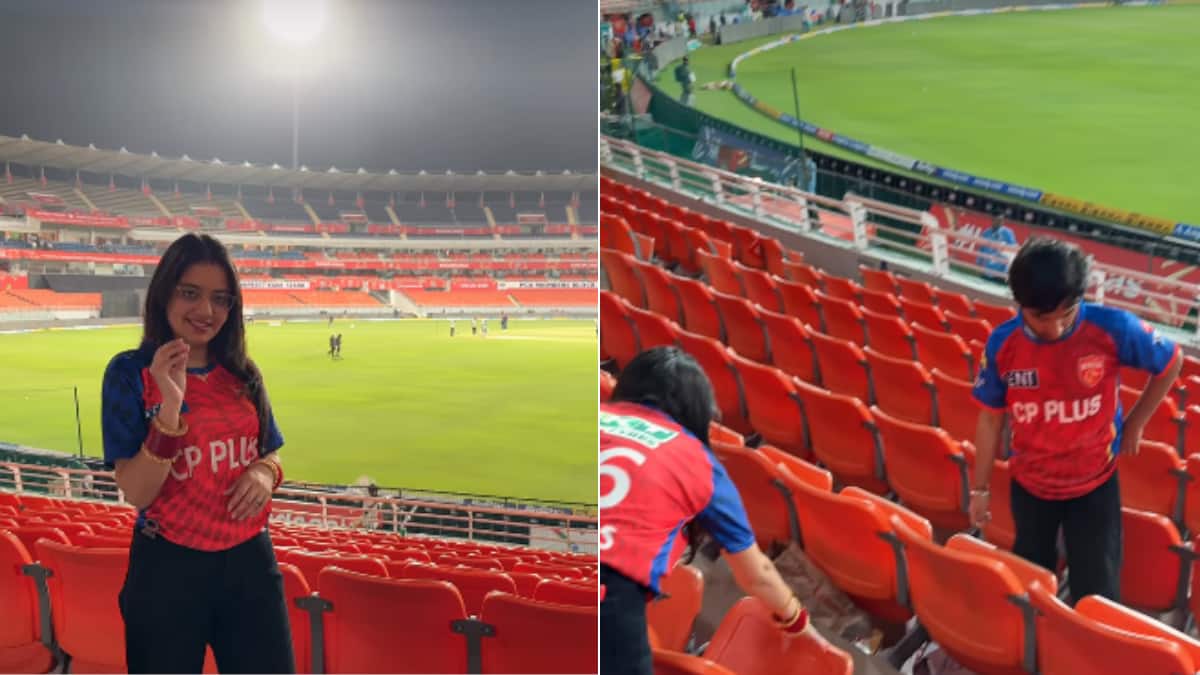
Fan Loses Ring In IPL Match: What began as a fun attempt to recreate a viral social media trend has seemingly ended in an expensive mishap for a woman during an Indian Premier League match. The incident apparently took place on 11 April at the Maharaja Yadavindra Singh PCA Stadium during the clash between Punjab Kings (PBKS) and Sunrisers Hyderabad (SRH). The woman, identified as Madhu Priya, was filming a video where participants pretend to toss a ring into the air as part of a trending reel. However, the act did not go as planned, leading to an unexpected and costly outcome. Ring Slips Mid-Recording, Sparks Panic - WATCH           View this post on Instagram                       A post shared by MadhuPriya • couple content creater• (@madhupriya_2426) In the now-viral footage, the ring can be seen slipping from her hand during the recording, leaving her visibly shocked. What was intended to be a harmless clip quickly turned into a frantic search operation. Madhu Priya, along with others seated nearby, was seen scanning the area in hopes of finding the missing jewellery. Despite their efforts in the video, the ring, which is claimed to cost Rs 70,000, apparently could not be located, and remains untraceable. Taking to Instagram, Madhu Priya shared the video of the incident and appealed for help in recovering the ring. In her caption, she wrote: "Rs 70,000 ka loss ho gaya. Ring is still missing." She also urged anyone present at the stadium who might have come across the ring to get in touch via direct message. To support her claim, she offered to provide ticket details as proof of her presence at the venue. "Agar “Maharaja Yadavindra Singh PCA Stadium” ka koi admi is video ko dekh rha h to please humari Ring dundke hume vapis krwa de (If someone from Maharaja Yadavindra Singh PCA Stadium is watching this video, please find our ring and get it returned to us.). DM us we will send you the Ticket details." The clip quickly spread across social media platforms, drawing a mix of sympathy and humour from users. While the video continues to gain traction online, the missing ring has yet to be found, serving as a cautionary tale about the risks of recreating viral trends without care. Also Check: MS Dhoni Latest Injury Update: Positive News For Chennai Ahead Of SRH vs CSK

NADA RTP Update: Abhishek Sharma, Axar Patel added to testing pool

India's T20 World Cup stars Abhishek Sharma and Axar Patel have joined NADA's Registered Testing Pool for 2026, replacing Smriti Mandhana and Shreyas Iyer. This elite list of 348 athletes, including prominent cricketers, track and field stars, and Olympians, ensures rigorous anti-doping checks. NADA's updated roster underscores its commitment to fair play across all sports.

VinFast VF MPV 7 First Look: Price, Features, And Range Revealed

Vinfast has launched its third product in India at Rs 24.49 lakh. The VF MPV 7 is an electric three row MPV that has a length of 4740mm and a wheelbase of 2840mm. The size is ample and the vehicle has the traditional V shaped design language but is toned down when compared to the VF7 or 6 SUVs. The DRLs further give it a sleek look while it gets traditional door handles which is a relief. It's large sized and the design gives it a good presence overall we feel while the paint finish is top notch. Interior and Features The MPV 7 has proper three rows while having a simple but minimalist look. Unlike the VF6 and 7, the touchscreen is not angled while the simple design showcases an airy feeling for the cabin which is important for an MPV. The centre console is dominated by a large touchscreen and enough storage spaces but there is no instrument cluster which takes time getting used to. You also need to use more functions via this touchscreen while equipment levels are sparse with no sunroof, 360 degree camera and ADAS. It has a rear camera, dedicated vents for AC for the third row, climate control, electric parking brake and wireless charging. Space and Comfort Space is huge though with large windows and seats offer enough support especially the second row with recline/slide. The third row is a surprise too with more than decent space but the second row misses out on blinds or a boss mode. Battery, Range and Verdict With 60.13 kWh battery pack, the MPV 7 has a 204bhp single motor with drive modes and regen modes. Range is around 517km ARAI. We feel the VF MPV 7 banks on the space and size which is more but it lacks some features seen on rivals.

Xiaomi Redmi A7 Pro vs Xiaomi Redmi A5: Here Is Which One Makes More Sense For You

Xiaomi Redmi A7 Pro vs Xiaomi Redmi A5: Xiaomi has two budget smartphones that are worth looking at side by side - the Redmi A7 Pro and the Redmi A5. Both sit at the lower end of the price spectrum, but they are built differently and target slightly different buyers. One comes with a stronger camera setup and 5G support, while the other packs a bigger battery and runs on a newer version of Android.  Here is a breakdown of how the two compare across the key areas that matter most to everyday users. Xiaomi Redmi A7 Pro vs Xiaomi Redmi A5: Design & Display The Redmi A7 Pro has a 6.78-inch IPS display with a resolution of 1080 x 2400 pixels, a 120Hz refresh rate, and a pixel density of around 393 PPI. It also comes with Corning Gorilla Glass 5 for added screen protection and carries an IP52 splash-resistant rating. The A7 Pro is available in Black, Mist Blue, and Palm Green, and measures 79.5 x 171.6 x 8.2 mm with a weight of 208 grams. The Redmi A5, on the other hand, has a slightly larger 6.9-inch screen but with a lower resolution of 720 x 1600 pixels and a pixel density of around 254 PPI. It does have a marginally higher screen-to-body ratio of 84.3% compared to the A7 Pro's 81%. The A5 also carries TUV certifications for low blue light, flicker-free performance, and circadian-friendly display. Xiaomi Redmi A7 Pro vs Xiaomi Redmi A5: Price The Xiaomi Redmi A7 Pro is priced at Rs 11,499, while the Xiaomi Redmi A5 comes in cheaper at Rs 8,999. That is a difference of Rs 2,500 between the two. Xiaomi Redmi A7 Pro vs Xiaomi Redmi A5: Camera The Redmi A7 Pro pulls ahead significantly here. It carries a triple rear camera setup with a 50MP f/1.8 primary lens, an 8MP secondary camera, and a 2MP sensor. The front camera is an 8MP shooter. Video recording on both the front and rear tops out at 1080p at 30fps. The Redmi A5 keeps things simple with a single 13MP f/2.2 rear camera and an 8MP front camera. It also records video at 1080p at 30fps. For anyone who uses their phone camera regularly, the A7 Pro is the clear winner in this department. Xiaomi Redmi A7 Pro vs Xiaomi Redmi A5: Battery This is where the Redmi A5 takes the lead. It comes with a 6000 mAh battery, which is larger than the 5500 mAh unit on the A7 Pro. However, the A7 Pro supports 33W fast charging, which charges the phone considerably faster than the 15W fast charging on the A5. So while the A5 holds more charge, the A7 Pro replenishes its battery much quicker. Xiaomi Redmi A7 Pro vs Xiaomi Redmi A5: Launch Date The Redmi A7 Pro was released on March 27, 2026. The Redmi A5 is expected to launch on October 16, 2026, meaning it has not arrived in the market yet at the time of writing. Xiaomi Redmi A7 Pro vs Xiaomi Redmi A5: Which Will Be Better? For most buyers, the Redmi A7 Pro offers more value in terms of camera quality, display sharpness, 5G connectivity, NFC support, and faster charging - all for Rs 11,499. The Redmi A5 may appeal to those who want a longer-lasting battery and a lower price point of Rs 8,999, but given that it is not yet available and runs on a weaker chipset, the A7 Pro is the stronger pick right now.

MS Dhoni Latest Injury Update: Positive News For Chennai Ahead Of SRH vs CSK

IPL 2026- MS Dhoni Latest Injury Update: The Chennai Super Kings may soon welcome back a familiar figure to their playing XI. Former captain MS Dhoni is reportedly closing in on full match fitness and could feature in the upcoming fixture against Sunrisers Hyderabad on Saturday, April 18. According to a report by RevSportz, the veteran wicketkeeper-batter is set to make a definitive call on Thursday morning regarding his travel to Hyderabad. Dhoni has been sidelined for the opening weeks of the IPL 2026 season due to a persistent calf strain, missing critical encounters against Delhi Capitals and Kolkata Knight Riders. The Rehab Milestone Designated captain Ruturaj Gaikwad has provided consistent updates on Dhoni’s recovery, noting that the rehabilitation process has followed a strict two-week timeline. While fans expected a return as early as April 11, the medical staff opted for caution to ensure the forty-four-year-old is fully prepared for the rigours of the mid-season grind. In his absence, Sanju Samson has flourished behind the stumps and with the bat, recently smashing a century that anchored Chennai's resurgence. The potential return of Dhoni presents a welcome selection headache for the management, as the team has found winning momentum with an unchanged side that now includes power-hitter Dewald Brevis and spinner Akeal Hosein. The Dhoni Influence From The Sidelines Even without taking the field, Dhoni’s tactical presence remains a cornerstone of the CSK dugout. Following Chennai’s recent victory over Kolkata, assistant coach Sridharan Sriram highlighted the veteran's impact on young Afghan spinner Noor Ahmad. Noor, who claimed a match-winning 3/21, had engaged in a lengthy technical discussion with Dhoni in the nets prior to the game. Sriram noted that the conversation helped the youngster adjust his pace through the air, allowing him to exploit a surface that offered more assistance than previous "flat" tracks. As the team prepares for the trip to the Rajiv Gandhi International Stadium, the possibility of having their "Thala" back in the gloves remains the biggest talking point in the camp.Also Check: Suryakumar Yadav To Be Sacked From T20 Captaincy? Here's What BCCI WantsAlso Check: Aussie Legend's Son Blames COVID Vaccine For Heart Attack

Dalal Street Ends Higher As Sensex Jumps Over 1,200 Points, Nifty Tests 24,200

The Indian benchmark indices ended higher on Wednesday as the Sensex jumped over 1,216 points to settle above 78,061 and the Nifty rose more than 372 points to close trade at 24,215.40 at 3:30 PM. In the 30-share BSE Sensex, among the top gainers were stocks such as IndiGo, Eternal, PowerGrid, TechMahindra and TCS. MEanwhile the laggards included stocks like Axis Bank, ICICI Bank and Bharti Airtel. In the broader markets, the Nifty Smallcap 50 jumped 2.38 per cent as volatility remained high. Sectorally, the Nifty Consumer Durables index rose 2.91 per cent. Previously, during the early morning session, the BSE Sensex opened the session around 78,200, rallying more than 1,300 points, while the NSE Nifty50 started trading above 24,200, climbing almost 400 points, as of 9:15 AM. The uptick in markets reflects improving investor sentiment amid expectations that geopolitical tensions may ease following renewed diplomatic signals between the United States and Iran. US-Iran Developments Drive Market Direction The trajectory of the US–Iran conflict continues to be the primary driver for global markets, particularly due to its influence on oil prices and investor risk appetite. Following the collapse of earlier negotiations, tensions had escalated sharply. A blockade on Iranian oil exports and disruptions in the Strait of Hormuz pushed crude prices above $100 per barrel, triggering a sell-off in global equities earlier this week. However, sentiment has improved after fresh indications that both sides may return to the negotiating table. Reports suggest a second round of talks could be scheduled soon, with US President Donald Trump signalling that the conflict may be nearing a resolution. While the shift in tone has calmed markets, uncertainty remains elevated, with any setback in talks likely to reverse sentiment quickly. Top Gainers Lead Early Trade Among the top gainers in early trade were InterGlobe Aviation, Infosys, Tata Consultancy Services, Eternal, Larsen & Toubro and Bajaj Finance. Market sentiment received a boost from easing geopolitical concerns and softer crude oil prices, with analysts pointing to renewed hopes of diplomatic engagement in West Asia as a key support for equities. Analysts See Positive Signals V K Vijayakumar, Chief Investment Strategist at Geojit Investments Limited, said expectations around the possible resumption of US–Iran talks and discussions between Israel and Lebanon, along with a sharp fall in Brent crude prices, are positive indicators for markets in the near term. He noted that crude prices have declined by around $10 over the past two days, which could help ease inflationary pressures and support overall risk sentiment. Institutional Flows Mixed On the institutional front, foreign investors remained cautious. Foreign Institutional Investors (FIIs) were net sellers on Monday, offloading equities worth Rs 1,983.18 crore, according to exchange data. Domestic Institutional Investors (DIIs), however, provided support by purchasing shares worth Rs 2,432.30 crore. Global Markets Track Optimism Asian equities advanced in early trade, tracking strong gains on Wall Street. South Korea’s Kospi led regional gains, while Japan’s Nikkei 225 and Chinese indices also traded higher. US markets closed firmly in positive territory overnight, supported by easing inflation concerns and optimism around geopolitical developments, signalling a revival in global risk appetite. Oil Prices Ease, Support Markets Crude oil prices declined in Asian trading as hopes of renewed negotiations reduced concerns over prolonged supply disruptions. Brent crude traded below the $95 per barrel mark, extending its recent correction after sharp gains earlier this week. Lower oil prices are seen as supportive for India, helping ease inflationary pressures and aiding macroeconomic stability.

Massive Fire At BYD Shenzhen Plant Garage Sends Thick Smoke Across Sky: WATCH

A major fire broke out at a multi-level parking garage inside BYD’s manufacturing complex in Shenzhen’s Pingshan district, triggering a large-scale emergency response. Thick plumes of black smoke billowed into the sky as flames engulfed the structure, alarming workers and residents in the surrounding industrial zone. The blaze, which erupted in a “three-dimensional” parking facility located in the Ma Luan subdistrict, was eventually brought under control by local fire and rescue teams. Authorities have confirmed that no casualties have been reported so far. Garage Stored Test, Scrapped Vehicles, Says BYD According to local emergency officials and the company, the affected facility was used exclusively for storing test, experimental, and end-of-life vehicles. BYD clarified that no production lines or customer-bound vehicles were housed in the garage. The automaker emphasised that the incident did not involve active manufacturing operations or finished vehicles awaiting delivery, helping ease concerns about potential disruptions to supply or customer orders. ‼️JUST IN: - An entire parking garage has been engulfed in flames in a massive EV fireat Chinese automaker BYD’s Pingshan facility in Shenzhen, China These cars are soon going to be in underground and condo parking garages in Canada and the UK. pic.twitter.com/DGYZan3kJr — Tablesalt 🇨🇦🇺🇸 (@Tablesalt13) April 14, 2026 Dramatic Visuals Show Flames, Emergency Rush Eyewitness videos circulating on social media captured the intensity of the fire, with flames spreading rapidly across a large section of the multi-storey structure. Dense smoke could be seen drifting over nearby areas, prompting swift action from emergency responders. Fire engines and police units rushed to the scene, as multiple teams worked to douse the flames and secure the perimeter. Authorities later confirmed that the fire has now been fully extinguished. Preliminary Probe Points to Construction Work Initial investigations, as cited by Chinese media, suggest the fire may have been triggered by improper external construction activity. Officials have ruled out any battery-related defect in mass-produced vehicles. Authorities also stated that the incident has not impacted BYD’s production facilities or output at the Pingshan plant. However, a detailed assessment of the cause and extent of damage is still underway. Expansion Plans Continue Unaffected The incident comes amid BYD’s ongoing efforts to expand its charging infrastructure across China. The company recently added 5,000 flash charging stations to its network, signalling continued growth as it scales up operations in a rapidly evolving global market.

//