Language Settings
Select Website Language
newshunt
newshunt

Filters

Channels
Topics
Other Filters

Venezuela Earthquake: Could Petrol And Diesel Costs In India Come Under Pressure?

The powerful earthquakes that struck Venezuela this week have triggered concerns over the country's crude oil exports, with experts warning that any prolonged disruption could affect India's oil imports and increase shipping costs. On June 24, Venezuela was hit by two earthquakes measuring 7.2 and 7.5 in magnitude within seconds of each other. The quakes, described as the strongest to hit the country in 125 years, have resulted in hundreds of deaths and thousands of injuries. Aftershocks continue to be reported in the affected region. The development comes at a time when India has been working to stabilise its crude oil supplies following recent disruptions linked to the conflict involving Iran. While the peace agreement between the US and Iran had raised expectations of smoother shipments through the Strait of Hormuz, the situation in Venezuela has emerged as another potential challenge for oil imports. Venezuela's Growing Role In India's Oil Imports India sharply increased its purchases of Venezuelan crude during April and May as uncertainty in the West Asia encouraged refiners to diversify their sourcing. This made Venezuela one of India's key crude oil suppliers during the period. Experts said the risks extend beyond damage to oil production facilities. Even if export terminals remain operational, power outages, damaged transport networks and restrictions at ports could delay shipments for several days or even weeks. La Guaira, one of Venezuela's major cargo ports, has been declared a disaster zone, raising concerns over port operations and shipping schedules. Longer waiting times for vessels could increase demurrage charges, while rerouting and delays may add to overall transportation costs. These additional expenses are expected to affect traders, refiners and insurance companies. Also Read: When An Indian Passport Isn't Enough, How Does An Indian Prove They Are Indian? ONGC Videsh Investments Could Also Be Affected Apart from crude oil imports, India also has investments in Venezuela's energy sector through state-owned ONGC Videsh. Any prolonged disruption to production or exports could affect the company's operational and economic interests. Earlier this month, Prime Minister Narendra Modi held discussions with Venezuela's acting President Delcy Rodriguez on expanding cooperation in sectors including mining, critical minerals, pharmaceuticals and automobiles. However, the earthquake may delay or alter some of these plans. Experts Urge Close Monitoring Experts said India's decision to source more crude from Venezuela helped diversify supplies away from the West Asia, but also exposed the country to a different set of risks. Shipping companies, energy traders and insurance firms are expected to closely monitor the situation as authorities assess the full extent of the damage. For India, the developments in Venezuela have added fresh uncertainty to an increasingly important crude oil supply route. Also Read : What's Delaying The India-US Trade Deal? Piyush Goyal Explains The Biggest Hurdle

Why A Falling Rupee Should Worry Every Investor? Hidden Risks To Stocks And The Economy

The Indian rupee is once again at the centre of India’s macroeconomic debate. For many investors, currency movement may look like a subject meant only for economists, importers, exporters or treasury desks. But that is not true. The rupee is not just a number flashing on a forex screen. It is a powerful signal that affects inflation, crude oil prices, corporate margins, foreign flows, fiscal stability and eventually the stock market.   When the rupee weakens sharply, the impact does not remain confined to the currency market. It travels through the economy. Imported goods become costlier. Oil companies need more dollars. Foreign investors reassess risks. Companies with dollar costs face pressure. Inflation expectations become sticky. The Reserve Bank of India is forced to intervene. And equity investors begin to ask a simple but important question: is this only a temporary external shock, or is it pointing to a deeper structural issue? That is the question India must answer today. After remaining relatively stable during 2023 and 2024, the Indian rupee has come under sustained pressure since early 2025. From levels of around Rs 86 per US dollar in January 2025, the currency weakened sharply and touched a record low near Rs 96.96 per dollar in May 2026. As of June 22, 2026, USD/INR was still trading around Rs 94.71, well above its six-month average.  This is not a small move. It reflects pressure from several directions: foreign portfolio outflows, higher crude oil risks, elevated dollar demand, global bond-yield pressure, trade uncertainty and weaker confidence in capital flows. In 2025, the rupee was among Asia’s weakest currencies, and the pressure has continued into 2026. The Crude Reality Of India’s Energy Bill India’s economy remains deeply tethered to the price of a barrel of crude. Because the nation imports nearly 88 per cent of its oil requirements, every spike in international energy prices serves as a mandatory Tax on national wealth.   A landmark study from, analysing the turbulent period between 2019 and 2024, provides a staggering figure: a USD 10 rise in the price of crude oil costs India approximately USD 16.4 billion annually. This creates what strategists call a Double Whammy. India faces a dual crisis: the commodity itself becomes more expensive at the exact moment the Rupee weakens due to the increased demand for Dollars to pay the bill. This vulnerability was laid bare during the 2022 geopolitical shock, where oil surged to USD 113 per barrel, dragging the Rupee to historic lows. Also Read: Bumble's Future In Focus As Dating App Explores Possible Sale: Report Rupee Pressure Dashboard The key point is that this weakness should not be dismissed as only a dollar-strength story. A stronger US dollar has played a role, but India’s own external vulnerabilities have magnified the pressure. The rupee’s current weakness is a reminder that currency stability depends not only on RBI intervention, but also on the strength of exports, investor confidence, energy security and policy credibility. Why The Rupee Matters For Investors For equity investors, the rupee acts like a hidden macro variable. It quietly influences sector performance, valuations and earnings expectations. A weaker rupee can benefit some export-oriented sectors, such as IT services, pharmaceuticals and select speciality chemical companies, provided global demand remains supportive. However, it can hurt import-heavy businesses such as aviation, oil marketing, electronics, certain chemicals, capital goods and companies with large foreign-currency debt. It can also affect inflation. India imports a large part of its crude oil requirement. When the rupee weakens, the landed cost of crude rises even if global oil prices remain unchanged. If oil prices rise at the same time, the pressure becomes double. This can hurt consumers, companies and government finances. This is why investors should track the rupee not as an isolated currency-market event, but as a signal of broader economic stress. The real challenge is that the rupee is weakening at a time when India’s headline GDP growth remains strong. This creates an unusual situation. The domestic economy may still look resilient, but the currency is warning that external balances and capital flows need attention. In simple terms, growth alone is not enough. India also needs stable and reliable foreign capital, competitive exports and lower dependence on imported energy. The Oil Shock: India’s Old Vulnerability Returns India’s macroeconomic stability remains closely linked to crude oil. The country imports nearly 88-90 per cent of its crude oil requirement. This means every major disruption in global energy markets quickly enters India’s external account. The West Asia crisis has made this risk sharper. The region remains crucial for global energy trade, and any disruption in key shipping routes can increase crude prices, freight costs and risk premiums. For India, this is especially sensitive because a large share of crude, LNG and LPG supplies has traditionally moved through West Asian routes. A sustained rise of USD 10 per barrel in crude prices can add roughly USD 13-18 billion to India’s annual oil import burden, depending on whether one uses net oil imports or gross crude import volumes. It can also widen the current account deficit by around 0.3-0.4 per cent of GDP. This is not a theoretical concern. In May 2026, India’s crude oil import value jumped to USD 18.7 billion from USD 10.3 billion a year earlier, even though import volumes were broadly stable. The increase was driven mainly by higher crude prices and a weaker rupee. This is exactly how the pressure builds. Oil importers need more dollars. Dollar demand rises. The rupee weakens further. A weaker rupee then makes imports even costlier. Unless offset by strong capital inflows or export earnings, the currency remains vulnerable. Trade Tensions Add Another Layer Energy is not the only concern. Trade uncertainty has also played a role. The US tariff escalation in 2025 disrupted India’s export momentum to the American market. After the initial tariff action, additional penalties linked to India’s Russian oil purchases increased the effective tariff burden on several Indian exports. The impact was visible in export numbers, with shipments to the US falling from USD 8.8 billion in May 2025 to USD 5.5 billion in September 2025.  A partial recovery followed later, but uncertainty continued because tariff-sensitive sectors remained under pressure. For the rupee, this matters because exports are one of the key sources of dollar inflows. When exports weaken and imports rise, the pressure on the current account increases. This affects investor sentiment and reduces the currency’s natural support. Geopolitical Risk Cannot Be Ignored Currency markets do not like uncertainty. During periods of regional instability, global investors prefer safety over growth. This is especially true for emerging markets. Even if the domestic economy is performing well, foreign investors can reduce exposure if geopolitical risks rise.  The risk premium attached to India increased after the regional security developments. While such events may be temporary from a market perspective, they can still influence capital flows, currency positioning and investor behaviour. For foreign investors, currency depreciation can reduce the value of their returns even if the stock price performs well in local currency terms. This is why currency stability is central to attracting long-term foreign capital. Also Read : What's Delaying The India-US Trade Deal? Piyush Goyal Explains The Biggest Hurdle The Domestic Side: Why External Shocks Hurt More External shocks alone do not explain the full story. They become more damaging when domestic structures are not strong enough to absorb them. This is where India needs to think beyond short-term currency Defence. One major issue is investor confidence. India’s 2015 Bilateral Investment Treaty framework has often been criticised for being restrictive. The requirement to exhaust local remedies before approaching international arbitration has created concern among foreign investors. When global capital has multiple choices, it tends to prefer jurisdictions where rules are clearer, dispute resolution is faster and exit pathways are predictable. Tax certainty is another important factor. Even though India has made progress in improving the business environment, memories of retrospective taxation and aggressive enforcement continue to affect investor perception. For large global investors and strategic capital, predictability matters as much as growth. There is also the issue of regulatory opacity. Frequent policy changes, non-tariff barriers and sudden compliance requirements can raise operational costs for companies. Quality Control Orders may be useful in certain cases, but if they become too widespread or unpredictable, they can act like hidden trade barriers. This can affect manufacturing competitiveness and reduce India’s ability to integrate with global supply chains. Fiscal Risk: Not A Crisis, But A Pressure Point India’s fiscal position is not in crisis, but it remains vulnerable to an energy shock. The Centre has been on a gradual consolidation path, with the fiscal deficit at 4.4 per cent of GDP in FY26 and budgeted at 4.3 per cent in FY27. However, high crude prices can complicate this path. If the full increase in fuel prices is not passed on to consumers, part of the burden shifts to state-owned oil marketing companies. This may protect consumers in the short term, but it creates a contingent fiscal risk. If oil marketing companies later require support, the government may have to absorb part of the burden. A prolonged crude shock can therefore widen the import bill, pressure oil companies, slow fiscal consolidation and keep global investors cautious. For markets, this means investors should not only track fiscal deficit numbers, but also hidden pressures created by subsidies, under-recoveries and oil-company balance sheets. What The RBI Can And Cannot Do The Reserve Bank of India has played an important role in managing currency volatility. It has used spot dollar sales, forward-market intervention, dollar-rupee swaps and temporary macroprudential measures to reduce disorderly movement in the rupee. These steps are useful. They prevent panic. They smooth volatility. They ensure that the currency market remains orderly. But they cannot permanently change the direction of the rupee if the underlying pressure remains strong. The RBI can sell dollars from reserves, but reserves are not infinite. It can use the forward market, but a larger forward book has to be unwound later. It can impose temporary restrictions on speculative activity, but such measures cannot replace durable capital inflows. This is why the rupee’s long-term stability will depend less on defending a specific level and more on improving India’s external strength. RBI intervention can buy time. Structural reform must use that time well. What India Needs To Do Next India’s currency strategy must move from short-term defence to long-term strength. A stronger rupee cannot be created by intervention alone. It must be supported by better exports, lower import dependence, higher productivity, deeper capital markets and greater investor confidence. 1. The first priority should be an investor-friendly treaty framework. India should modernise its investment treaty structure and use the 2024 UAE treaty as a practical benchmark. A clearer dispute-resolution process and well-defined investor protections can reduce uncertainty and attract more stable foreign capital. 2. Second, India must offer long-term tax certainty. A strong legal commitment against retrospective tax changes would help reduce the “sovereign risk” discount that often affects foreign investor sentiment. 3. Third, India should simplify cross-border capital transactions. Rules around share swaps, overseas listings and international fundraising need to become easier. The GIFT International Financial Services Centre can play a larger role in helping Indian companies access global investors while keeping activity within an Indian regulatory framework. 4. Fourth, trade policy needs rationalisation. India’s import duties remain higher than many competing Asian economies. Over time, lower and more predictable tariffs can help Indian manufacturers become part of global supply chains, reduce input costs and support export growth. 5. Fifth, India must expand rupee-based trade settlement. If neighbouring countries and trade partners can borrow, settle and invest in rupees more easily, the rupee will gradually become more useful internationally. Foreign entities holding surplus rupee balances from trade should be allowed to invest part of those funds in Indian corporate bonds and commercial papers. This would deepen India’s debt market and make rupee settlement more meaningful. 6. Sixth, India must reduce its import dependence in critical areas. Energy security, critical minerals, domestic manufacturing and private-sector R&D are all linked to currency strength. A country that imports too much and exports too little high-value output will always remain vulnerable to external shocks. Also Read: Financial Rule Changes From July 1: EPFO, ITR, Credit Cards, LPG Prices And More Reform Roadmap: What Needs To Change What Investors Should Watch Now The rupee’s movement in the coming months will depend on a few key variables. Crude oil prices will remain the most important external factor. If crude remains elevated, pressure on the import bill and current account deficit will continue. Foreign portfolio flows will also be crucial. If FPIs remain cautious, the rupee may find it difficult to recover meaningfully.   Investors should also track RBI’s forward-book position. Heavy use of the forward market can reduce immediate pressure on spot reserves, but it may limit near-term appreciation later. Trade deficit numbers will provide another important signal. A widening trade deficit, especially due to oil, can keep the rupee under stress.   At the sector level, investors should be selective. Exporters with strong dollar revenues may benefit from rupee weakness, but only if demand remains healthy. Import-heavy companies may face margin pressure. Companies with foreign-currency debt need closer scrutiny. Businesses with pricing power and low import dependence may be better placed. Sector Impact of a Weak Rupee The Big Message The rupee’s weakness is not merely a currency-market issue. It is a mirror reflecting India’s external vulnerabilities. It shows that while domestic growth remains strong, the economy still needs deeper reform to protect itself from global shocks. RBI can manage volatility, but it cannot be the only line of defence. Durable currency strength will come from stronger exports, stable foreign capital, lower energy dependence, deeper domestic markets, better investor protection and higher productivity. For investors, this is a moment to look beyond headline index levels. Currency trends can influence earnings, margins, flows and valuations. A weak rupee does not mean investors should become pessimistic on India. But it does mean portfolios must be examined with more discipline. India’s long-term opportunity remains intact. But to convert that opportunity into durable wealth creation, the economy needs a rupee backed not only by central bank intervention, but by real competitiveness.  (“Disclaimer: This article uses information originally published by Dalal Street Investment Journal (DSIJ). The views expressed are those of the original authors and not necessarily of ABP Network Pvt. Ltd. This content is provided for general informational and educational purposes only and should not be construed as investment, financial, legal or tax advice. Readers are advised to conduct their own research and/or consult a qualified financial advisor before making any investment decisions. This content is for informational purposes only and should not be treated as investment advice. ABP Network, its employees and associates shall not be responsible or liable for any losses or damages arising directly or indirectly from the use of or reliance on this article or any information contained herein.”)

Health Insurance Premium Rising Despite No Claims? Here's Why Your Renewal Costs More

Rising health insurance premiums continue to worry millions of policyholders, with many questioning why renewal costs keep climbing despite making no claims. Social media is increasingly filled with complaints from customers who say their premiums have risen by 20 to 30 per cent, while some have reported even steeper increases. The confusion has only deepened since the removal of GST on health insurance in September last year. Many expected the tax relief to translate into lower renewal costs. Instead, premium hikes have continued, leaving policyholders wondering what is driving the increase. The answer lies in how health insurance premiums are calculated. GST was only one part of the total premium. Insurers can revise premiums for an entire health insurance product when the overall cost of providing coverage increases. These revisions are generally applied across all policyholders under that product, regardless of whether an individual has made a claim. Why Your Health Insurance Renewal Premium May Have Increased One of the most common reasons for a higher premium is moving into a new age bracket. Most insurers calculate premiums using age bands, with different rates applying to different age groups. Crossing into the next band can lead to a noticeable increase in the renewal amount, even if every other aspect of the policy remains unchanged. Another major factor is the steady rise in healthcare costs. Hospital room charges, diagnostic tests, medicines, doctors' consultation fees, surgeries and other medical expenses have all become more expensive over time. As insurers pay larger claim amounts, these rising costs are reflected in the premiums charged to customers. Health insurance also operates on a risk-pooling model. Premiums from policyholders are collected into a common pool, from which claims are paid. If the overall claims experience for a particular plan worsens, insurers may reprice the product for everyone enrolled in that plan. As a result, even policyholders who have never filed a claim may see their renewal premium increase. Also Read: NSE IPO: Why India's Largest Stock Exchange Will List On BSE Should You Reduce Your Health Insurance Cover? A higher renewal premium often prompts policyholders to reduce their sum insured. For instance, someone with a Rs 10 lakh policy may consider lowering the cover to Rs 5 lakh to reduce the annual premium. While this approach may provide immediate savings, it also weakens financial protection at a time when medical inflation continues to rise. A cover amount that seemed sufficient a few years ago may no longer be enough to meet the cost of a serious hospitalisation. Before making any changes, policyholders should first understand why the premium has increased and carefully assess all available options instead of reducing their protection without evaluating the long-term impact. Understand The Reason Behind The Premium Hike The first step is to request a detailed premium break-up from the insurer. This can help determine whether the increase is linked to an age-band change, product repricing, additional covers or any other factor. Many policyholders overlook this step, but knowing the exact reason can help identify whether there is any scope for review. Policyholders who pay a higher premium because of a medical condition disclosed at the time of purchase may also consider requesting a review of the loading. If the condition is now well-controlled or has improved significantly, updated medical records can be shared with the insurer. Although there is no guarantee of a reduction, it is worth seeking a reassessment. Another option is portability. Customers whose premiums have become difficult to manage can explore switching insurers, with waiting period credits generally carried forward subject to the new insurer's approval. However, the premium should not be the only deciding factor. Coverage, exclusions, room rent limits and other policy features should be evaluated carefully before making a switch. Also Read: Secured Vs Unsecured Loans: One Wrong Choice Could Mean Higher EMIs And Cost You Thousands Deductibles And Super Top-Ups Can Help Manage Costs Choosing a deductible is another way to reduce premium costs. A deductible is the amount the policyholder agrees to pay before the insurer starts settling claims. For example, with a Rs 25,000 deductible on a Rs 2 lakh hospital bill, the policyholder pays the first Rs 25,000 while the insurer pays the remaining eligible amount. Since the policyholder assumes part of the financial risk, insurers may offer a lower premium. A Rs 25,000 deductible on a Rs 10 lakh health insurance policy, for example, can reduce the premium by around 20 to 25 per cent. Policyholders should also understand whether the deductible applies annually or separately to every claim, as an annual aggregate deductible is generally more favourable. For those planning over the long term, a super top-up policy can offer another way to balance coverage and affordability. Instead of purchasing a Rs 1 crore base policy, a policyholder may choose a Rs 10 lakh base cover along with a Rs 90 lakh super top-up. The base policy can cover smaller hospitalisation expenses, while the super top-up is designed to take over once expenses exceed Rs 10 lakh. This strategy may also prove useful over time. As savings and investments grow, policyholders may eventually be able to meet the initial Rs 10 lakh from their own resources and continue with only the super top-up to cover major medical expenses.

US waives sanctions on Iranian crude: Here's why Indian refiners are still hesistant to buy it

Indian refiners are unlikely to resume buying Iranian oil despite a temporary US waiver. Existing supply commitments, payment concerns, and the waiver's short duration mean most refiners have already secured other crude sources. While opportunistic purchases at steep discounts are possible, a significant return to Iranian barrels is improbable for now, with China expected to remain the primary buyer.

Google Finance Is Back After 10 Years To Help Sort Out Your Portfolio

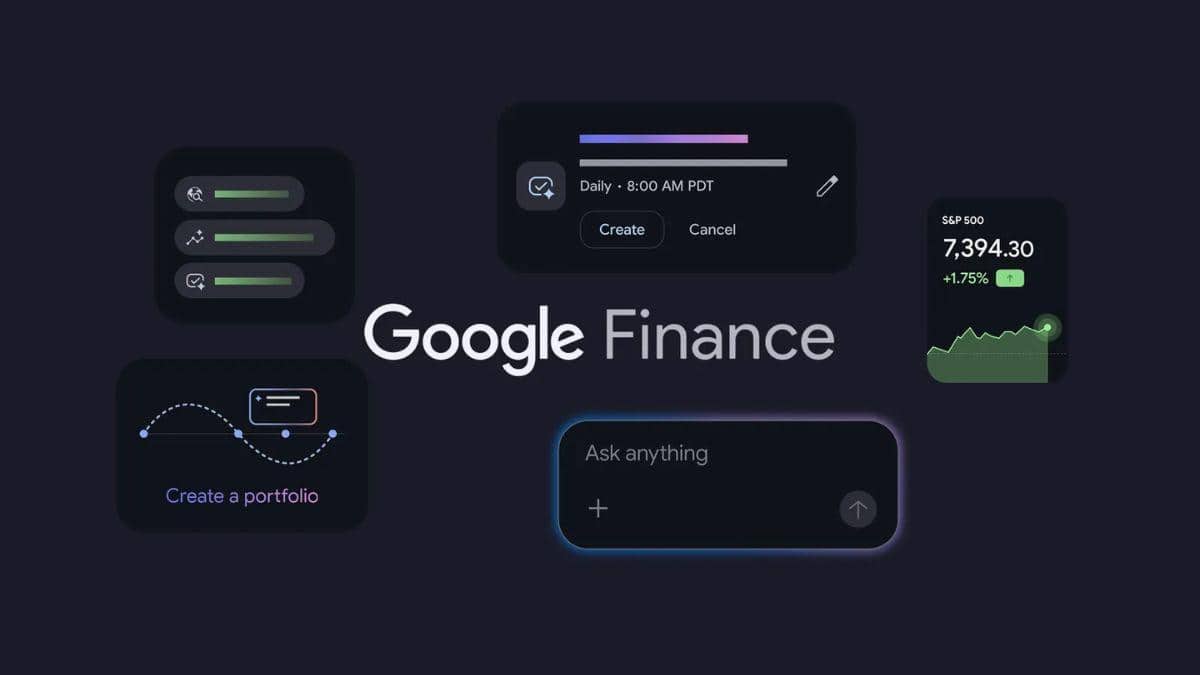
Google has officially rolled out its AI-powered redesign of Google Finance, moving the platform out of beta and pairing it with a fresh Android app. The update, which began testing last August, brings together portfolio tracking, conversational research tools, and custom briefings powered by Gemini models.  Users can now consolidate their investments into a single dashboard, ask detailed questions about their holdings, and even bring back an app that disappeared from Android over a decade ago. Here's a closer look at what's new and how it works. What New Features Does Google Finance Offer Now? According to Google, the standout addition is Portfolios, which is rolling out globally and lets users view all their investments in one consolidated dashboard. This includes performance data along with insights into asset allocation. Setting one up is straightforward: users can either upload a screenshot or attach files like PDFs and CSVs detailing their holdings. ALSO READ: Amazon Is Putting $48 Billion Into India: Here's What That Actually Means Once a portfolio is in place, the research tool allows for deeper analysis through natural conversation. People can ask things like which sectors are underrepresented in their portfolio, or how their fixed income allocation might affect long-term growth. Google Finance has also introduced custom briefings that work the same way. Users can request something like a daily pre-market briefing covering major overnight moves in cryptocurrencies, and the platform will generate it on request. Notifications for these briefings appear through the Google app on both Android and iOS, as well as on the Finance research panel on the web. Why Is The Google Finance App Returning To Android? After being pulled from Android back in 2015, the Google Finance app is now making a comeback. At launch, it gives users access to their watchlist, real-time data, and AI-generated "key moments" that explain why a particular stock moved. The app also includes live financial news feeds and the same AI research tool available on the web version. ALSO READ: Want GTA VI Cheaper? This Gift Card Trick Could Save You 15% In terms of design, the app uses a floating toolbar with an "Ask" option placed in the corner, and it leans heavily on Material 3 Expressive styling throughout. Looking ahead, Google plans to add live earnings calls in the coming months, alongside both of today's updates. The Android app is available starting today, while an iOS version is expected later this year.

Corporate India may avoid the worst of the Middle East crisis if US-Iran truce holds: Crisil

Global market jitters over Middle East tensions have eased following a US-Iran ceasefire, improving the outlook for Indian corporate profitability. Crisil Ratings now anticipates a smaller 100-basis-point decline in operating margins for fiscal 2027, down from a previous 200-basis-point estimate. While most sectors are expected to see minimal disruption, some like airlines and specialty chemicals remain under pressure due to persistent input cost challenges.

End Of Aussies In IPL? Here's Why Australian Players Might Skip IPL 2027

IPL 2027: Australia captain Pat Cummins has reportedly indicated he might skip the Indian Premier League next year to prioritise major national commitments over franchise cricket. The veteran fast bowler faces a demanding schedule with a Test tour of India, a historic home match in Melbourne, an away Ashes series, and a fifty-over World Cup defence in southern Africa later that season. Workload Demands Face Core Bowling Attack The heavy workload for the senior pace attack remains a key issue for management. Managing fitness across twenty-one Test matches could force several key players to sit out franchise tournaments. "Something has got to give at some stage next year and it's not going to be test matches or an ODI World Cup," Cummins told the Sydney Morning Herald. ALSO READ | 6,6,6,6,0,6! Marcus Stoinis Unleashes Carnage In MLC 2026 With 16-Ball Blitz The captain noted that a final decision regarding his playing participation with Sunrisers Hyderabad will occur much closer to the event, especially after dealing with multiple recent physical injury issues. Adding to the speculations are the reports thatSunrisers Hyderabad may not retain Pat Cummins next year National Duty Over IPL 2027 "The priorities for me are always the test matches and that ODI World Cup. If I play all of India, I definitely need some sort of break," the captain explained. Additional reports highlight that veteran fast bowlers Mitchell Starc and Josh Hazlewood could also see their workloads managed carefully by national selectors to ensure full fitness before major tournament campaigns. ALSO READ | What Gautam Gambhir Told Shreyas Iyer After He Became India's New T20 Captain "I see a world where we're potentially winding some bowlers down, even say at the back end of an Indian series to give them extra rest," the captain recently added. The Grand Finale Of A Long Journey The financial impact could be substantial for the athlete, who reportedly earns nearly two million dollars annually for leading his domestic franchise during the intensive playing tournament summer season window. However, national selection rules emphasize that representing the country in the historic Ashes series and defending the global fifty-over title remains the ultimate benchmark for elite Australian cricket career goals. "It's going to be a big push the next 18 months or so, but I think we'll look back on it hopefully," the highly experienced national team captain safely concluded. Aakash Chopra Raised Concerns Over Disruption In Planning The persistent absence of key international players has drawn strong criticism from prominent analysts within the broadcasting fraternity. Former India opening batsman Aakash Chopra publicly questioned the operational reliability of elite overseas fast bowlers.   Chopra highlighted that stars like Mitchell Starc, Pat Cummins, and Josh Hazlewood frequently create strategic selection problems for IPL franchises due to sudden unavailabilities or delayed arrivals despite being fit.   The popular commentator explained on his YouTube channel how these recurring absences disrupt foundational squad structures and complicate long-term tactical planning for team management ahead of intensive tournament fixtures.  

Amazon Is Putting $48 Billion Into India: Here's What That Actually Means

Amazon will pump an additional $13 billion into India's artificial intelligence and cloud infrastructure, pushing its total investment commitment in the country to $48 billion for the 2026 to 2030 period. The fresh capital will go toward expanding AWS data centre capacity in Mumbai and Hyderabad, building on the $35 billion pledge the company had already made in December last year.  This comes as global hyperscalers race to strengthen their footholds in the Indian market, with rivals like Microsoft and Google also pouring billions into the country's fast-growing digital infrastructure space. Why Is Amazon Increasing Its Investment In India? Amazon CEO Andy Jassy said the company wants to be "a long-term partner in India's growth story" and aims to support the country's "priorities of democratizing access to AI, digitising small businesses, creating jobs, and enabling exports."  Jassy made the announcement after meeting Indian Prime Minister Narendra Modi on Thursday, where he spoke about how much India matters to Amazon, given that the company already runs multiple business lines there, including e-commerce, AI, cloud, and entertainment.  ALSO READ: Want GTA VI Cheaper? This Gift Card Trick Could Save You 15% With this latest commitment, Amazon's cumulative investment in India between 2010 and 2030 reaches $88 billion. The company said its data centres will give Indian startups, enterprises, and government bodies access to custom AI chips, managed AI services, and secure cloud technology. The announcement comes months after India secured $50 billion in investment commitments within a single day from American tech giants such as Amazon and Microsoft last December. Google has also committed $15 billion to set up data centre capacity for a new AI hub in southern India, reflecting how hyperscalers are positioning themselves in the country. How Fast Is India's Data Centre Industry Growing? India still lacks domestic production of cutting-edge chips and does not have a frontier-scale foundation model comparable to top American or Chinese systems.  Even so, its data centre sector is expanding at a rapid pace, helped by long-term tax incentives the government has rolled out to attract global hyperscalers. ALSO READ: Apple Hiked MacBook And iPad Prices, So Why Did The iPhone 17 Pro Just Got Cheaper? "India's DC industry is emerging as one of the fastest growing globally," Nomura said in a report earlier this month.  The brokerage noted that the country's data centre capacity climbed to around 1.6GW in 2025 from 350MW in 2019, marking a 29% compounded annual growth rate compared with 20% globally.

What Gautam Gambhir Told Shreyas Iyer After He Became India's New T20 Captain

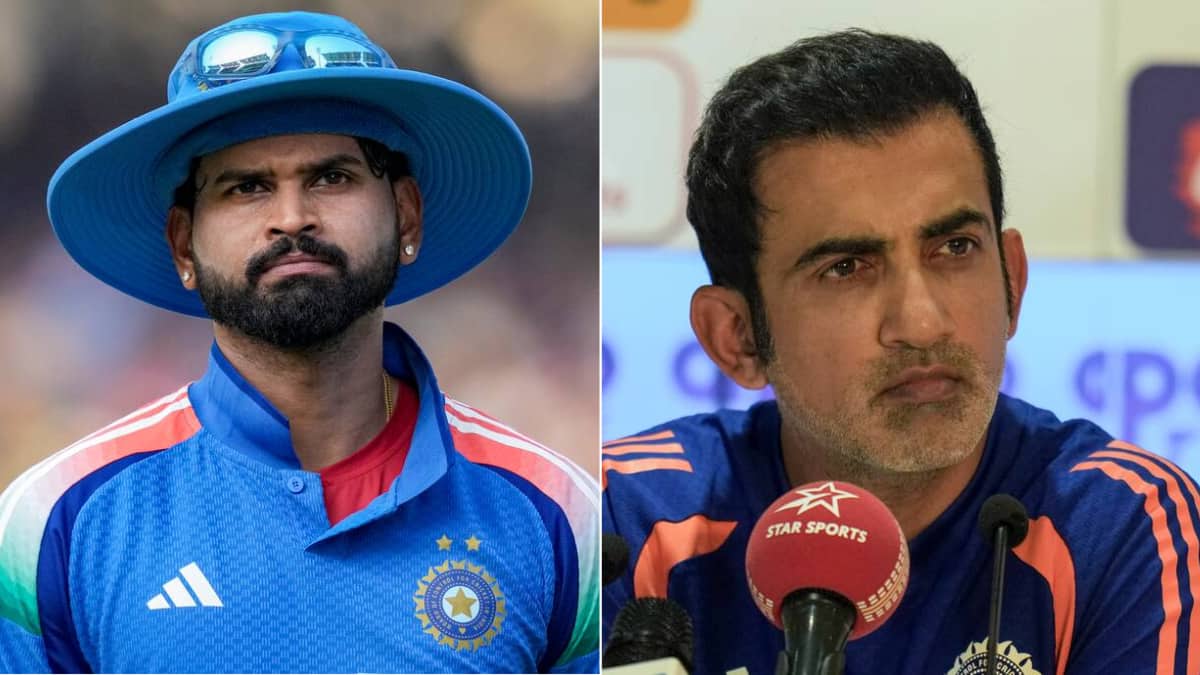
Gautam Gambhir Message To Shreyas Iyer: A new era has officially begun for India's T20I side, with Shreyas Iyer taking charge as captain ahead of the upcoming series against Ireland. BCCI named him as Suryakumar Yadav's successor few weeks ago. Before stepping onto the field for his first assignment as captain, however, Iyer received a special message from head coach Gautam Gambhir, a mentor who has played a significant role in one of the most successful phases of his franchise career. The exchange took place ahead of Team India's training session and was shared by the BCCI, giving fans a glimpse of the mutual respect between the two. Gambhir Welcomes India's New Captain Congratulating Iyer on his appointment, Gambhir spoke about the responsibility that comes with leading the national team. "I want to congratulate Shreyas on being appointed India's captain. It's a huge honour to lead your country, and I'm sure you'll do a fantastic job, not just on the field, but off it as well," Also Check: Will Vaibhav Sooryavanshi Debut In IND vs IRE 1st T20I? Everything We Know So Far Iyer, in return, outlined the values he hopes to bring into the dressing room during his tenure. "Captaining India is a great honour and privilege. I want to build a strong team culture where everyone supports each other through thick and thin. We're one family. Let's play fearless cricket, enjoy each other's success, and give our best to win every game," Successful Partnership Continues On National Stage Although Iyer has not represented India in a T20I since December 2023, his return comes after building an impressive leadership resume in franchise cricket. He has previously guided Delhi Capitals and Punjab Kings to IPL finals, and although he didn't lift the title on those occassion, his greatest success came with Kolkata Knight Riders, where he lifted the IPL trophy while Gambhir served as the team's mentor. That successful partnership now moves onto the international stage. Iyer's first assignment as India's T20I captain will begin in Belfast when India face Ireland in the opening match of the two-game series, starting today, June 26. Expectations are naturally high, with Indian fans hoping his proven leadership in the IPL translates into success with the national side.

Want GTA VI Cheaper? This Gift Card Trick Could Save You 15%

GTA 6 Leaks: Gamers eager to get their hands on Grand Theft Auto VI without paying full price now have a clever workaround. While the game's pricing isn't as steep as many had feared, with the Standard Edition priced at $79.99 and the Ultimate Edition at $99.99, fans are still on the hunt for ways to cut costs.  A Reddit user has shared a method that could help PS5 and Xbox Series X/S players save up to 15% on their purchase using discounted gift cards, and the community is buzzing with appreciation. How Can You Get A Discount On GTA VI Using Gift Cards? Reddit user kkaylumm explained how they used the website Eneba to purchase PlayStation Store gift cards at a reduced rate. By applying the discount code 'FINALLY', they managed to get £90 worth of PlayStation gift cards for just £74.96. That credit was then used to buy GTA VI directly from the PlayStation Store, working out to roughly 15% less than the standard price. ALSO READ: Not Afraid Of GTA 6! These Games Are Still Launching In November 2026 This isn't a one-off deal either; similar discounts can be found across both the UK and US markets with a bit of searching. Another option is Loaded, which currently offers up to 10% off PlayStation gift cards and 7% off Xbox gift cards. The original poster received plenty of praise from fellow gamers for sharing the tip. "You gained nothing personally from posting this, yet you did so anyway to help others, love to see stuff like this, legend," replied one fan. Another added, "I recommend checking deals.gg. It shows games and keys as well as gift cards on other stores that can be cheaper than Eneba." ALSO READ: GTA 6 Pre-Orders, Price, Release Date: Everything You Need To Know Others shared their own wins, too. "Yup, I got a $100 USD PlayStation card for $92 USD, which covered the sales tax in my state, so around $100 flat. I'll take my little $10 win lol," one person wrote. Another commented, "Thanks a lot, mate! Ended up getting £90 worth of PS gift cards for £77." Since official discounts on GTA VI are unlikely anytime soon, tricks like this remain one of the few ways to save before launch. When Does GTA VI Release On PS5 And Xbox? Securing an early copy also comes with added perks. Pre-ordering unlocks exclusive DLC, and players will be able to pre-load the game starting 12 November. GTA VI is set to launch on PlayStation 5 and Xbox Series X/S on 19 November.

Can Salty Fries And Coke Really Ease Migraine Symptoms? Woman Shares 4 Weird Hacks

A migraine is much more than just a bad headache. This neurological disorder can result in severe headaches, nausea, vomiting and increased sensitivity to light, sound, and odors. According to a report by Hindustan Times, On June 18, Brittany Hockley Siegrist, claimed to be able to alleviate her migraine symptoms by using four unusual cures. She humorously refers to her routine as the "McMigraine Meal," which consists of drinking Coca-Cola with coffee, eating salted fries and bathing her feet in hot water. Neurologists warn that these techniques are mostly anecdotal and should not take the place of evidence-based medical care, despite the video receiving a lot of attention online. Hot Water May Offer Temporary Comfort The woman explains that by dilating blood vessels in the lower body, bathing the feet in extremely hot water helps reroute blood flow away from the head, possibly lessening the throbbing sensation associated with migraines.The American Migraine Foundation claims that various non-pharmacological comfort techniques, such as heat or cold therapy, may offer some people short-term symptom relief even though there is currently little scientific evidence to support this method. However, each person's migraine causes and reaction to treatment differ significantly. ALSO READ |Trying To Lose Belly Fat? Experts Say You're Probably Focusing On The Wrong Exercise Does Eating Salty Fries Help? Eating salty fries during a migraine attack is another suggestion made in the film. The salt helps replenish electrolytes that may be lost through vomiting and the carbohydrates give you rapid energy if the migraine was caused by low blood sugar.Dehydration and missing meals are known migraine triggers for many people, according to the American Migraine Foundation. Eating frequent meals and drinking enough water because in those who are vulnerable, both dehydration and extended fasting can cause headaches. Health professionals emphasize that there is no clinical proof that eating fast food will alleviate migraines.           View this post on Instagram                       A post shared by Brittany Hockley Siegrist (@brittany_hockley) Coke And Coffee: The Caffeine Connection Drinking coffee and Coca-Cola together is another part of the widespread routine. The National Health Service (NHS) states that because coffee is a component of several migraine drugs and amplifies the effects of other painkillers, it can occasionally assist in reducing migraine symptoms. The NHS also cautions that some people may experience headaches as a result of consuming too much coffee or abruptly discontinuing it. Experts advise consuming caffeine in moderation rather than using it as a regular migraine treatment because everyone reacts to it differently. ALSO READ |Can A Small Amount Of Air In An Injection Be Fatal? Experts Explain Facts Migraine Relief Isn't One Size Fits All Neurologists emphasize that migraine is a very personal disorder with individual differences in triggers and therapies. Recurrent migraine sufferers are advised by the Mayo Clinic to identify personal triggers such as stress, sleep deprivation, dehydration, hormone fluctuations, missing meals and to collaborate with a medical practitioner to create a suitable treatment plan. Health professionals advise against considering the popular "McMigraine Meal" as a medically proven remedy even though it might have helped the woman who shared it. Effective migraine therapy, according to the World Health Organization (WHO), frequently incorporates lifestyle modifications, trigger identification and when required, appropriate medical treatment. The most effective ways to manage this neurological illness continue to include staying hydrated, eating regular, balanced meals, getting enough sleep and consulting a doctor if you get frequent or severe headaches. Disclaimer: The information provided in the article is intended for general informational purposes only. It is not a substitute for professional medical advice, diagnosis, or treatment. Always seek the advice of your physician or other qualified healthcare provider with any questions you may have regarding a medical condition.

School Dropouts To IPL Superstars: Indian Cricketers Who Left School To Pursue Cricket

For many aspiring athletes, balancing education and sport can be a challenge. While countless Indian cricketers completed their studies before making it big, a few decided to leave formal education behind to devote themselves entirely to cricket.   Their stories reflect the difficult choices they made at a young age in pursuit of excellence. With years of hard work, discipline, and perseverance, these players went on to represent India and establish themselves among the country's biggest cricketing stars.  Indian Cricketers Who Left School To Focus On Cricket  Vaibhav Sooryavanshi – The young cricketer is reportedly continuing his education through online schooling while focusing on his cricket career. He has not dropped out of school but has opted for a flexible mode of learning to balance academics and professional cricket. (Source: Media reports.)  Hardik Pandya – Dropped out after Class 9 because of financial difficulties and concentrated on cricket full-time. (Source: Media reports.)  Shubman Gill – Discontinued his studies after Class 10 to focus on professional cricket and age-group tournaments. (Source: Times of India.)  Jasprit Bumrah – Completed higher secondary education but did not pursue college, instead prioritising his cricket career. (Source: Media reports.)  Sachin Tendulkar – Left school at the age of 16 after earning a place in the Indian national team, deciding to dedicate himself completely to cricket. (Source: Biographical accounts and media reports.)  Ishant Sharma – Finished school-level education before committing entirely to cricket after making his way into the Indian team at a young age. (Source: Media reports.)  Shikhar Dhawan – Several media reports suggest he did not continue with higher education as he chose to focus on cricket from an early stage. (Source: Media reports.)  A Difficult Choice That Shaped Their Careers  Walking away from formal education was not an easy decision for these cricketers. Each of them recognised their potential early and invested their time in rigorous training, domestic competitions, and constant improvement. Their journeys demonstrate that success in professional sport often demands immense commitment, discipline, and sacrifice from a young age.  Inspiring Millions Through Dedication  Today, these players are celebrated not only for their achievements on the cricket field but also for the determination they showed while pursuing their ambitions. Their stories continue to motivate young athletes across the country to work relentlessly towards their goals while also highlighting the importance of making informed career decisions based on individual circumstances.  (Disclaimer: The educational details in this article are based on publicly available interviews, media reports, and biographical sources. ABP Live English has not independently verified this information and is not responsible for any discrepancies or variations across sources.)

Apple Hiked MacBook And iPad Prices, So Why Did The iPhone 17 Pro Just Got Cheaper?

Apple Price Hike: Apple has increased prices across its MacBook and iPad range in India, with some models now costing up to Rs 1 lakh more than their launch price. The hikes come days after CEO Tim Cook said rising memory costs in the global supply chain have made price increases unavoidable. Interestingly, the iPhone 17 Pro and Pro Max have escaped this round of revisions entirely. For anyone planning to buy a new iPhone, this could be the right window before prices potentially follow the same upward trend as Apple's other products. Why Is This The Best Time To Buy The iPhone 17 Pro? The iPhone 17 Pro and Pro Max are still available at their original launch prices of Rs 1,34,900 and Rs 1,49,900, respectively, even as the rest of Apple's lineup gets costlier. Buyers can find them for even less on e-commerce platforms like Flipkart, where the Pro variant is listed at Rs 1,27,900.  ALSO READ: Microsoft's DART Report Exposes Ransomware Attack With A Hidden Second Hacker Since Apple has already flagged rising memory costs as a reason for hiking prices on Macs and iPads, there is no guarantee the iPhone 17 series will remain unaffected for long.  With memory prices continuing to climb globally, this gap in pricing may not last, making now a practical time to consider the purchase before any possible correction. How Much Have MacBook And iPad Prices Increased In India? The MacBook Air with the M5 chip has gone up from Rs 1,19,900 to Rs 1,49,900, a rise of Rs 30,000, while the 15-inch MacBook Air now costs Rs 1,79,900, up by Rs 35,000 from its earlier price of Rs 1,44,900.  ALSO READ: Quote Of The Day | Bill Gates On Why Failure Matters More Than Success The hike is steeper in the MacBook Pro series, where the base 14-inch model with M5 chip and 16GB RAM has increased by Rs 70,000, from Rs 1,69,900 to Rs 2,39,900. The M5 Max variant of the same model has gone up by Rs 1 lakh.  The budget-focused MacBook Neo has also seen a Rs 10,000 increase. On the iPad front, the 11-inch iPad Air with M4 chip has moved from Rs 64,900 to Rs 89,900, a jump of Rs 25,000, while the iPad Pro with M5 chip and 256GB storage now costs Rs 1,39,900, up from Rs 99,990, an increase of Rs 39,910.

Oral Cancer: Tobacco And Vaping Are Putting More Young People At Risk, Know The Early Warning Signs

Tobacco use claims millions of lives every year across the world. Yet, despite repeated health warnings, a large number of people continue to smoke, chew tobacco, or use vaping products. While most people associate tobacco with lung and heart diseases, experts warn that it is also one of the leading causes of oral cancer. The biggest concern is that the early warning signs often appear inside the mouth but are frequently ignored until the disease reaches an advanced stage. Why Are Oral Cancer Cases Increasing? According to Dr Amit Chakraborty, oral cancer cases are rising rapidly in India, but awareness remains alarmingly low. Many people dismiss recurring mouth ulcers, bleeding gums, or other oral problems as minor issues. However, any mouth sore or ulcer that does not heal within two weeks should never be ignored. Such persistent symptoms could be an early sign of oral cancer, and delaying medical attention may allow the disease to progress. ALSO READ | Stay Healthy This Summer With These 6 Nutrient-Rich Superfoods What Are The Early Warning Signs? Oral cancer does not always begin with severe pain. Experts say several seemingly harmless symptoms can signal the disease. These include persistent mouth ulcers, white or red patches inside the mouth, pain while chewing, unexplained lumps or swelling, loose teeth, difficulty speaking or swallowing, constant bad breath, or numbness in any part of the mouth. People who smoke, chew tobacco, or vape should be especially alert to these warning signs. Are All Mouth Ulcers A Sign Of Cancer? Not every mouth ulcer is cancerous. Dr Amit Chakraborty explains that ordinary ulcers usually heal within three to four days without causing major problems. However, if an ulcer continues to grow, bleeds easily, causes persistent pain, or makes eating, drinking, or speaking difficult, it should be examined by a healthcare professional. The presence of white or red patches along with the ulcer makes a timely medical evaluation even more important. ALSO READ | Government Makes QR Codes Mandatory On Vaccines And Cancer Medicines; Here's Why Younger Adults Are Now At Risk Oral cancer was once considered a disease that mostly affected people between the ages of 50 and 75. However, this trend is changing rapidly. Doctors are increasingly diagnosing oral cancer in people aged 25 to 45, particularly among those who smoke, chew tobacco, vape, or consume alcohol regularly. Poor oral hygiene can further increase the risk. Can Oral Cancer Be Treated? The good news is that oral cancer is highly treatable when detected early. Dr Amit Chakraborty says that patients diagnosed in the initial stages have a survival rate of nearly 80 to 90 per cent. This is why recognising the warning signs and seeking prompt medical advice can make a significant difference in treatment outcomes and recovery. Disclaimer: The information provided in the article is intended for general informational purposes only. It is not a substitute for professional medical advice, diagnosis, or treatment. Always seek the advice of your physician or other qualified healthcare provider with any questions you may have regarding a medical condition

//