Language Settings
Select Website Language
newshunt
newshunt

Filters

Channels
Topics
Other Filters

iQOO 15 With Snapdragon 8 Elite Gen 5 Launched In China: Check Price, & Specifications

iQOO has officially launched its newest flagship gaming smartphone, the iQOO 15, in China. This phone is the direct successor to the iQOO 13 and comes loaded with major performance and display upgrades. The brand is clearly targeting mobile gamers and power users with this one. It features a new premium design, an advanced cooling system, and lightning-fast charging.  iQOO 15 also becomes one of the first devices to use Qualcomm’s brand-new Snapdragon 8 Elite Gen 5 chipset. iQOO 15 Price and Colour Variants The iQOO 15 is available in multiple storage and colour options. It starts at CNY 4,199 (around Rs 451,000) for the 12GB RAM and 256GB storage model.  The higher variants include 12GB/512GB at CNY 4,699 (Rs 58,000), 16GB/256GB at CNY 4,499 (Rs 55,000), and 16GB/512GB at CNY 4,999 (Rs 61,000). The top-end 16GB/1TB version costs CNY 5,499 (around Rs 68,000). All the prices listed in rupees are just a rough translation of chinese currency, Yuan. iQOO has also introduced a special Honor of Kings 10th Anniversary Collector’s Edition priced the same as the top variant. In terms of colours, the phone will be available in Track Edition (Black), Legendary Edition (White), Lingyun, and Wilderness (Light Green). iQOO 15 Specifications  The iQOO 15 packs a 6.85-inch Samsung M14 AMOLED LTPO display with 2K resolution, 144Hz refresh rate, and up to 2,600 nits brightness.  It supports Dolby Vision, HDR10+, and features an ultrasonic fingerprint sensor under the screen. Powering the phone is the Snapdragon 8 Elite Gen 5 chipset, paired with the Q3 gaming chip, up to 16GB LPDDR5X RAM, and 1TB UFS 4.1 storage.  It runs on Android 16 with OriginOS 6. For photos, it features a 50MP Sony IMX921 main camera, a 50MP periscope telephoto lens with 3x zoom, and a 50MP ultrawide sensor.  The front has a 32MP selfie camera. It gets a massive 7,000mAh battery with 100W wired and 40W wireless charging. Other highlights include dual speakers, Wi-Fi 7, Bluetooth 6.0, NFC, IP68/IP69 rating, and a 14,000mm² vapour cooling chamber for gamers.

Will Oppo Reno 15 Pro Max Remain Only In China? Here’s Everything We Know

Oppo has just launched its Find X9 series in China, and the global launch is set for October 28. After this, the next Oppo phones are likely to come from the Reno series. This year’s Reno 15 series was expected to have three models: Reno 15, Reno 15 Pro, and Reno 15 Pro Max. But a recent leak from X user Yogesh Brar suggests Oppo may have changed its global plans.  The Reno 15 Pro Max will now stay exclusive to China, while the global release will include only the Reno 15 and Reno 15 Pro. Oppo Reno 15 Series Price & Availability Oppo has not revealed global pricing yet. For now, only the Reno 15 and Reno 15 Pro are expected to be sold internationally.  OPPO just cancelled Reno 15 Pro Max for Global markets..It will be only launched in ChinaGlobal markets will only get Reno 15 & Reno 15 Pro — Yogesh Brar (@heyitsyogesh) October 20, 2025 The top-end Reno 15 Pro Max will launch in China, likely before the end of this year. The phones are expected to reach stores in October for global buyers. Oppo Reno 15 Pro Max Specifications  The Reno 15 Pro Max focuses heavily on cameras. It is rumoured to have a triple rear camera setup with a 200MP Samsung HP5 main sensor, a 50MP telephoto lens, and an ultra-wide camera. The front camera is expected to be 50MP.  The phone may include Oppo’s Lumo imaging technology for better photos and videos, with advanced AI features for low-light and portrait shots.  It will feature a 6.78-inch flat OLED LTPO display with 1.5K resolution and a variable refresh rate from 1Hz to 120Hz. The device is likely powered by the Dimensity 9400 chipset and runs Android 16 with ColorOS 16.  Other features may include a 6,500mAh battery, an under-display fingerprint sensor, Wi-Fi 7, NFC, dual stereo speakers, and a sleek glass-metal body for a premium feel. Despite the change in the global launch plan, the Reno 15 Pro Max is still expected to debut in China this year, while international buyers will have the Reno 15 and Reno 15 Pro to choose from.

NASA opens SpaceX’s moon lander contract to rivals amid Starship delays, sparking new competition for Artemis 3 mission

NASA is opening its prestigious Artemis 3 moon landing contract to new bidders, including Blue Origin, due to delays with SpaceX's Starship. This move aims to ensure a timely return to the Moon amid intensifying international competition, particularly from China. The agency seeks accelerated proposals to maintain US leadership in space exploration.

Teens Who Hate Their Bodies Are Seeing 3x More Harmful Instagram Posts: Meta Report

Meta, the company behind Instagram, recently studied how its platform affects teenagers’ body image. An internal report, reviewed and reported by Reuters, shows that teens who often felt bad about their bodies saw more posts related to eating disorders than other teens. These posts included images focusing on certain body parts, negative comments on body types, and content about dieting or disordered eating.  While the research does not prove Instagram causes harm, it highlights a link between negative body feelings and the type of content teens encounter on the platform. Meta Research Shows Teens See More Harmful Content Meta surveyed 1,149 teens during the 2023-24 school year, asking about their feelings toward their bodies after using Instagram.  Researchers then analysed the posts these teens saw over three months. The study found that 223 teens who often felt bad about their bodies were exposed to “eating disorder-adjacent content” in 10.5% of their feeds, compared to just 3.3% for other teens.  Teens with negative feelings also saw more mature, risky, or harmful content overall, accounting for 27% of their feed versus 13.6% for peers.  The research highlighted that even content not directly breaking Instagram rules could still affect teen well-being and mental health. Instagram Faces Pressure To Limit Harmful Content Meta’s researchers noted that teens seeing harmful content might be seeking it out themselves, so no direct cause-and-effect link was proven.  Still, the study revealed that Instagram exposes teens reporting body dissatisfaction to a lot of sensitive material, prompting warnings within Meta.  The company said it is working to show age-appropriate content, reduce harmful posts for teenagers, and use PG-13 standards.  Experts say the findings are concerning because teens with vulnerabilities may be targeted with content that could worsen their self-image and mental health.  Parents and educators are also urged to guide teens on healthy online use, monitor exposure, and have open conversations about body image.

Elon Musk To Tesla Shareholders: Pay Up Or Watch Me Walk Away

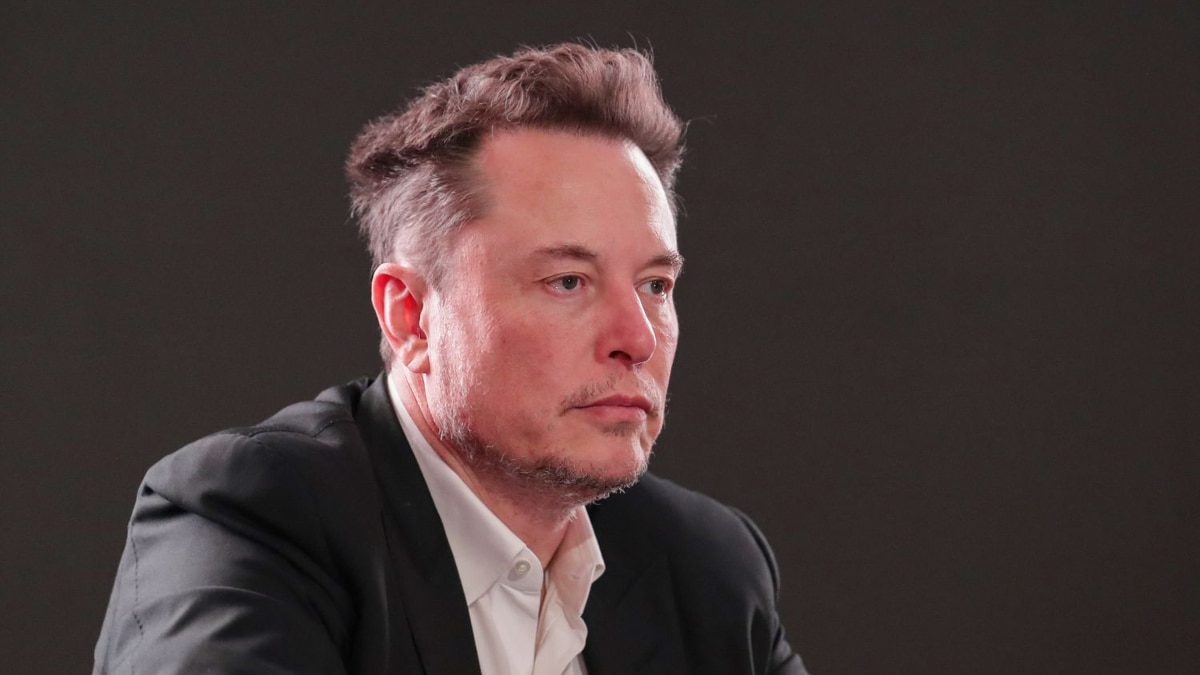
Elon Musk has put Tesla shareholders in a tough spot: approve his enormous new pay package or risk losing him as CEO. “Which of those [other] CEOs would you like to run Tesla? It won’t be me,” Musk warned, ahead of the crucial November 6 shareholder meeting that could redefine Tesla’s future leadership and power balance. Tesla is worth more than all other automotive companies combined. Which of those CEOs would you like to run Tesla?It won’t be me. — Elon Musk (@elonmusk) October 19, 2025 The Billion-Euro Battle Over Pay At the centre of the storm is Proposal 4, a performance-based compensation plan potentially worth €1 trillion if Musk meets a series of ambitious market and product goals. The vote also includes a re-run of his 2018 €47 billion package, which was invalidated by a Delaware court for being pushed through by a board packed with Musk’s friends and family. Following that setback, Musk moved Tesla’s incorporation to Texas, where he hopes for more control. Another contentious element, Proposal 3, links two separate issues: refilling Tesla’s empty employee stock fund with 60 million shares, and granting Musk a special reserve of 208 million shares worth around €78 billion, with no performance conditions. To approve the employee pool, shareholders must also approve Musk’s reserve. Critics say the company is holding the employee stock fund “hostage” after already diverting €22 billion from it for an “Interim Award” to Musk. In total, the proposals could hand him more than 630 million new shares while the entire workforce gets only 60 million. Musk’s Quest for Power After selling Tesla stock to fund his purchase of X, Musk’s ownership fell from 25% to 13%. He has said he “doesn’t feel comfortable” with his current stake and wants to regain 25% control, a level that would let him block shareholder reforms aimed at increasing accountability. He’s also hinted that without it, Tesla’s key AI and robotics projects could move to his other private companies. The Stakes for Tesla Tesla’s electric vehicle sales and profits have been sliding, and analysts blame Musk’s distractions and public behaviour for hurting the brand. Still, the stock remains overvalued thanks to investor faith in Musk’s promises of robotaxis and humanoid robots. Now, Tesla has even launched ad campaigns, rare for the brand, not to sell cars, but to convince shareholders to back Musk. As the November vote nears, investors face a stark choice: risk the company’s most valuable showman or reward him with one of the biggest paydays in corporate history.

RBI Flags Surge In SME IPOs As Retail Investors Drive Rs 9,110 Crore Fundraise In FY25

The SME IPO market in India saw a sharp surge in activity during the financial year 2023-24 (FY 2023-24) and FY 2024-25, supported by strong retail participation and favourable market sentiment, the latest Reserve Bank of India (RBI) October Bulletin has said. Small and medium enterprises had raised Rs 5,917.19 crore in FY24, to which Rs 5,660.93 crore (94.80 per cent) was raised issuing fresh shares and Rs 310.26 crore (5.19 per cent) through offer for sale (OFS). The numbers soared significantly in FY25, with SMEs raising Rs 9,110.97 crore. Fresh issues (Rs 8,344.37 crore) contributed 91.5 per cent, while the OFS part was Rs 775.6 crore or 8.5 per cent. Most of the SME IPOs, during this period, recorded high oversubscription levels and listing gains. According to the Bulletin, Macroeconomic and policy factors like overall market buoyancy and advancement in payment and settlement mechanisms in the IPO market drove this boom. The SME firms used most of the raised funds for capital enhancement or working capital. However, despite robust listing gains, post-listing performances of these SME stocks reveal both opportunities and risks for the investors. "While the buzz around SME IPOs may seem exciting, investing solely on market sentiment can be risky. During bullish phases in the market, enthusiasm and investors’ appetite may cause investors to overlook due diligence. In this phase, demand for IPOs surges, and expectations of substantial listing gains can lead to inflated valuations," the Bulletin said. However, market reversals can quickly dampen this optimism. SME IPOs may offer impressive gains in favourable conditions but carry higher volatility and risk during downturns, making due diligence indispensable. Investors should carefully evaluate the company’s fundamentals, growth prospects, and risk factors before committing capital, the bulletin suggested. Meanwhile, given the strong growth of start-ups in India, most of which have innovative business models, the provision of risk capital for these firms becomes crucial. Keeping in view the spurt of SME IPOs in recent months and the associated challenges from the perspective of investor protection, SEBI, in consultation with NSE, BSE and merchant bankers, had initiated the review of the IPO framework for the SME segment. These measures aim to reduce information asymmetry and regulatory arbitrage, ensure proper utilisation of IPO proceeds, prevent market manipulation, and protect retail investors, the bulletin noted. (This report has been published as part of the auto-generated syndicate wire feed. Apart from the headline, no editing has been done in the copy by ABP Live.)

Kolkata, Howrah Choke On Kali Puja Night As Firecracker Timing Flouted; AQI Turns ‘Severe’ In Parts

Kolkata: Kolkata and Howrah's air quality deteriorated sharply on Kali Puja night as firecrackers were burst beyond the permissible hours of 8 pm to 10 pm, flouting guidelines issued by the West Bengal Pollution Control Board (WBPCB) and police, environmentalists said on Tuesday. A WBPCB official said while the Air Quality Index (AQI) reached 186 PM 2.5 at Victoria Memorial in the city, it touched 364 at Belur in Howrah at 10 pm on Monday. An AQI between 151 and 200 is considered ‘poor’, 201 to 300 ‘very poor’, and above 300 is classified as ‘severe’. At Padmapukur, the AQI read 361, while it breached the 252 mark at Ghusuri, both in Howrah district. In Kolkata's Ballygunge, the AQI touched 173, while at Jadavpur it was 169 at 10 pm, the PCB official said. At Rabindra Bharati University in the Sinthi area in the northern part of the city, the AQI touched 167. At 8 pm on Monday, the AQI was 164 at Victoria, 159 (Jadavpur), 117 (Fort William), 161 (Belur Math), 102 (Rabindra Bharati University) and 134 at Ballygunge. Affirming the spurt, the official said they were analysing the results. Environmentalist Somendra Mohan Ghosh said there was rampant and frequent use of sound-emitting firecrackers in north and south Kolkata and Howrah since evening. "From Kashipur, Sinthi, Jorasanko, Maniktala to Kasba, Tollygunge, Regent Park, Behala and Jadavpur, high-decibel firecrackers were burst everywhere. Both police and WBPCB remained mere spectators and failed to curb the sale and use of firecrackers," he alleged. He said the situation in Howrah is worse, and authorities should brace for further worsening of the situation during the post-Kali Puja celebrations on Tuesday. Naba Dutta of Sabuj Manch, an organisation of environmentalists, also blamed police and the pollution watchdog for having "failed" to enforce regulations, leaving elderly citizens, ailing persons, children and pets exposed to sound and air pollution.  (This report has been published as part of the auto-generated syndicate wire feed. Apart from the headline, no editing has been done in the copy by ABP Live.)

Samvat 2082: Muhurat Trading Ends, Sensex Over 84,400, Nifty Marginally Higher Amid Volatile Markets

Indian equity markets began Samvat 2082 on a positive note, with benchmark indices clocking solid gains during the special Muhurat Trading session on Tuesday. However, by the time the session came to an end, both indices erased their gains and ended on a volatile note. The BSE Sensex settled the session above 84,400, jumping 63 points, while the NSE Nifty50 ended trading near 25,900, inching up almost 26 points, around 2:45 PM. On the 30-share Sensex, Bajaj Finserv, Infosys, Axis Bank, Tata Steel, and PowerGrid stood among the gainers. Meanwhile, the laggards included Kotak Bank, HCL Tech, ICICI Bank, Maruti, and Asian Paints. In the broader markets, the Nifty Microcap250 stood out with gains of more than 1 per cent. Sectorally, the Media index led the Diwali rally after it gained 0.56 per cent. On the other hand, the Midsmall Financial Services slipped 0.11 per cent. Muhurat Trading The Muhurat Trading session, conducted annually on Diwali, marks an auspicious beginning to the Hindu New Year - Samvat 2082 this time. The one-hour window, held today between 1:45 PM and 2:45 PM, allows investors to place symbolic trades to usher in prosperity and financial growth. Trading remained active across equities, futures and options, commodities, currency derivatives, and the Securities Lending and Borrowing (SLB) segments. Markets will remain closed on Wednesday following the Diwali festivities. Notably, the Sensex opened today above 84,600, rising over 250 points, while the  Nifty started the hour-long ceremonial trade near 25,925, up by nearly 100 points at 1:45 PM. Strong Start After Solid Samvat 2081 The new Samvat year began on an optimistic note following four consecutive days of market gains. On Monday, the Sensex had risen 411 points, or 0.49 per cent, to 84,363.37, while the Nifty gained 133 points, or 0.52 per cent, to 25,843.15, supported by strong earnings from leading corporates and upbeat global cues. In Samvat 2081, both benchmark indices delivered moderate annual gains of around 6 per cent. Analysts believe that the market’s positive tone could extend into the new year, supported by healthy corporate fundamentals, resilient domestic demand, and easing global uncertainty. “The combination of festive optimism, steady macroeconomic indicators, and encouraging global trends has created a strong platform for the markets to build momentum in Samvat 2082,” said market experts, noting that profit booking near resistance levels remains a short-term risk. Global Markets Asian markets also ended higher earlier in the day, lending further support to domestic sentiment. The Shanghai Composite advanced 1.36 per cent, Hong Kong’s Hang Seng rose 0.77 per cent, South Korea’s Kospi added 0.24 per cent, and Japan’s Nikkei 225 gained 0.15 per cent. Overnight, Wall Street also closed in the green, adding to optimism across global equities.

Tired Of Liquid Glass On Your iPhone? Apple's iOS 26.1 Beta FINALLY Lets You Turn It Off (Well, Almost)

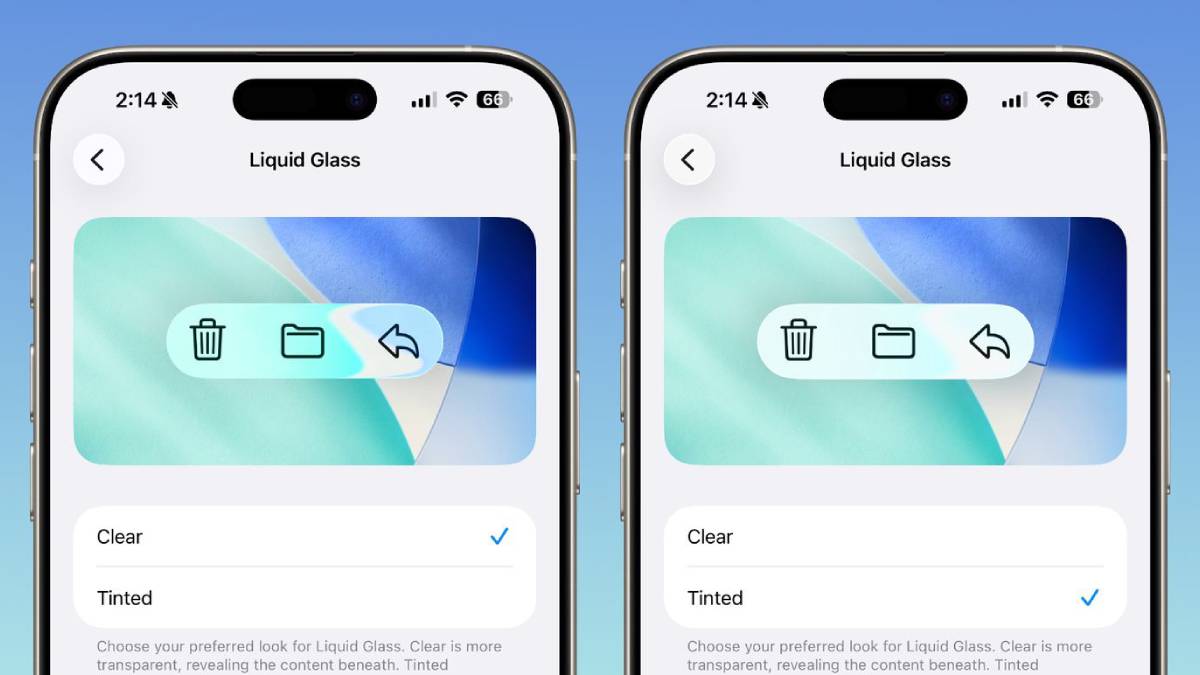
iOS 26.1 Update: Apple is tweaking one of the flashiest yet most divisive features of its latest iOS overhaul, the Liquid Glass UI. The company’s upcoming iOS 26.1 update gives users more control over the hyper-transparent interface that made headlines and headaches when iOS 26 launched last month. A Softer, Less Shiny Liquid Glass When Apple rolled out iOS 26, the new Liquid Glass design was meant to mark a bold visual shift, sleek, reflective, and translucent across menus, buttons, and notifications. But while some users admired the modern sheen, others felt it was a usability nightmare. The excessive transparency made elements blend with the background, drawing comparisons to the overly glossy Windows Vista era. Responding to mixed reactions, Apple has now introduced a transparency control in its latest beta version of iOS 26.1. The new toggle, spotted in Settings > Display and Brightness, lets users choose between two modes: “Clear” and “Tinted.” Clear vs. Tinted: A Choice for the Minimalist and the Practical According to MacRumors, the “Clear” option maintains the existing Liquid Glass look, highly transparent and showing layered backgrounds beneath buttons and system bars. The new “Tinted” mode, on the other hand, increases opacity and adds contrast, making text and controls easier to distinguish. This adjustment applies system-wide, from app interfaces to Lock Screen notifications. Apple explains that the feature was directly influenced by user feedback. During the summer beta phase, many testers requested a way to tone down the see-through aesthetic. “The added setting provides additional customisation in iOS 26.1, iPadOS 26.1, and macOS Tahoe 26.1,” the company noted. Beyond Transparency: More Tweaks Coming in iOS 26.1 The transparency control isn’t the only refinement arriving in this update. The iOS 26.1 beta also introduces a new slide-to-stop gesture for alarms and timers, support for new Apple Intelligence languages, a redesigned Apple TV app icon, and minor adjustments across the Settings app. For users who found Liquid Glass more distracting than dazzling, iOS 26.1 could be the fix they have been waiting for. With the new “Tinted” mode, Apple seems to be dialing down the shine and turning up the usability.

WhatsApp Cracks Down On Spam: New Limits On Messages To Unresponsive Contacts

WhatsApp is preparing a new safeguard against spam, and this time, it’s about how many messages you can send to people who don’t respond. The Meta-owned platform is quietly testing a monthly cap on outbound messages to non-responders, a move aimed at curbing misuse by businesses and mass broadcasters. A new limit to curb unwanted pings The upcoming restriction will count every message sent to recipients who never reply. Once that limit is reached, users or businesses won’t be able to send further messages to those contacts for the rest of the month. WhatsApp hasn’t confirmed the exact number yet, as the cap is currently being tested across various markets. According to media reports, all outgoing messages to people who do not reply, whether personal, promotional, or informational, will be part of the tally. Users nearing the threshold will reportedly receive a banner or pop-up alert to avoid abrupt restrictions. WhatsApp clarified that the new rule is not meant to affect everyday conversations. The company told TechCrunch that “typical users who message known contacts are unlikely to hit the limit.” Essentially, your regular back-and-forth chats won’t be touched, but if you’re reaching out repeatedly to people who never respond, those attempts will add up. For example, if someone messages a new contact three times after meeting them at a conference and gets no reply, those three attempts will count toward the monthly quota. The feature primarily targets spammers and businesses using bulk lists without prior consent. Businesses may have to rethink their strategy The new system could significantly impact marketing-heavy accounts. Businesses that depend on mass broadcasts will need to adapt by seeking user opt-ins, tweaking campaign flows, or designing messages that encourage quick replies. “Those who ignore the warning prompts risk temporary outbound blocks to non-responsive recipients,” WhatsApp cautioned. This isn’t the company’s first anti-spam effort. Since mid-2024, WhatsApp has introduced one-tap unsubscribe options for promotional messages, tightened marketing restrictions, and expanded broadcast message limits across several countries, including India, where it has over 500 million users. The new cap is currently being rolled out to select regions as WhatsApp tests different thresholds before finalising the global standard. Once live, the update is expected to bring a noticeable reduction in unsolicited messages, without disrupting normal, two-way conversations. For most users, the change will be invisible. But for marketers and businesses who rely on aggressive outreach, WhatsApp just made the inbox a little harder to flood.

Shiba Inu (SHIB) Traders Are Rotating Into Little Pepe (LILPEPE), Is This the Next 100x Meme Coin?

Shiba Inu earned its name in the meme coin space after it delivered that massive rally that remains iconic in the crypto market today. Yet, it's struggling today as the market moves away from hype to real utility. More competitions are coming up and stealing the spotlight.The spotlight is now shifting toward Little Pepe (LILPEPE), a presale meme project built with infrastructure and narrative momentum. Could LILPEPE be the next 100× meme coin that absorbs SHIB’s waning energy? Shiba Inu (SHIB): Losing Steam as Traders Rotate Shiba Inu has fallen significantly now. It lost 7.4% in the past day. Currently, it trades at $0.0000096. However, SHIB token burns paint a mixed picture.  On October 15th, a Coinbase-associated wallet burned over 140 million SHIB, which is a notably large burn event. Despite the token burn, its price didn't see a notable increase. This shows weak market sentiment.  Meanwhile, analysts believe Shiba Inu's narrative strength is fading. Community excitement is waning, perhaps due to its poor performance this year. With dwindling catalysts and an oversaturated supply, some holders are starting to look beyond the meme OG. Many are now rotating into Little Pepe, a new generation meme coin. Little Pepe (LILPEPE): The Meme Infrastructure Play Stealing the Spotlight Shiba Inu's investors are shifting towards Little Pepe because of its ambition. It's not just another meme token built on hype. Instead, Little Pepe (LILPEPE) is being built as the first meme-native Layer-2 blockchain. The Pepe Chain promises ultra-low transaction fees and fast finality. There are also no buy/sell taxes, protecting users.  That combination gives it an edge over older meme coins that struggle under network congestion or high gas burdens. Pepe’s Pump Pad: Launchpad That Fuels the Ecosystem A standout feature is Pepe’s Pump Pad, Little Pepe’s built-in meme launchpad. It aims to do what Pump.fun is doing, but with enhanced features. Most importantly, the anti-sniper bot protection guards investors against unfair presale dumps. Meanwhile, any new meme project launched on the launchpad generates gas demand and liquidity flow that pulls value back into $LILPEPE. It's a self-sufficient ecosystem rather than a one-hit meme gamble. Presale Momentum and Community Fire Little Pepe’s presale has already drawn major attention. As of Stage 13, the project has raised over $27.12 million and sold more than 16.5 billion tokens at $0.0022 per token. The community metrics mirror that heat. It has seen tens of thousands of engaged Telegram and X users so far.  Also, the $777,000 giveaway has now attracted over 450,000 entries. Even the new mega giveaway of over 15 ETH to the biggest buyers of the last stages has drawn in over 75,000 people.  The team has confirmed listings on major centralized exchanges on day one. The project has passed its CertiK audit. It is also listed on CoinMarketCap and CoinGecko. These achievements have helped investors trust and believe in the project. Why Traders Believe LILPEPE is the Next 100× Meme Coin. Shiba Inu had its spotlight time in 2021 when it started as undervalued and rocketed to legendary status. In 2025, Little Pepe is poised to become the next 100x meme coin. Whales and early investors see LILPEPE’s dual value proposition: it’s both a cultural meme and a technical backbone. The Pepe’s Pump Pad recursive economic loop could make it one of the few meme tokens with sustainable, built-in utility. Its presale momentum, giveaway virality, and confirmed CEX listing are also strengthening its bullish outlook. If the token lists with a high volume, a massive rally can start, sending LILPEPE rocketing. Conclusion: A New Meme Era May Be Unfolding Shiba Inu built the bridge between memes and mainstream adoption. However, the market’s focus is clearly shifting. Traders aren’t just looking for nostalgia. They’re chasing the next big asymmetric play that blends meme energy with real technology. That’s why the rotation toward Little Pepe (LILPEPE) feels more like evolution than speculation. Its Layer-2 backbone, built-in launchpad, and massive community traction creates a strong narrative for Little Pepe. If presale momentum continues and listings go as planned, LILPEPE could be the next 100x meme coin. 👉 Join the Little Pepe presale today and participate in the giveaway programs. For more information about Little Pepe (LILPEPE) visit the links below: Website: https://littlepepe.com Whitepaper: https://littlepepe.com/whitepaper.pdf Telegram: https://t.me/littlepepetoken Twitter/X: https://x.com/littlepepetoken Disclaimer: This is a sponsored article. ABP Network Pvt. Ltd. and/or ABP Live do not endorse/subscribe to its contents and/or views expressed herein. Crypto products and NFTs are unregulated and can be highly risky. There may be no regulatory recourse for any loss from such transactions. Cryptocurrency is not a legal tender and is subject to market risks. Readers are advised to seek expert advice and read offer document(s) along with related important literature on the subject carefully before making any kind of investment whatsoever. Cryptocurrency market predictions are speculative and any investment made shall be at the sole cost and risk of the readers.

Gold Prices Regain Pace On Oct 21, Check Gold Rates Today In Delhi, Mumbai, Ahmedabad, And More Cities

Gold Price Today: India, the world’s second-largest consumer of gold after China, depends predominantly on imports to meet domestic demand, with recycled gold contributing only a minor share to total supply. Since gold is priced internationally in US dollars, fluctuations in the rupee-dollar exchange rate directly affect costs for Indian buyers. Within the country, gold often trades at a premium over global benchmark rates. This markup is largely driven by import duties, Goods and Services Tax (GST), and additional state-level levies, which together push up the price of both jewellery and bullion across India. Globally, gold prices are shaped by multiple factors, including bond yield movements, central bank monetary policy, and broader investor sentiment. Its enduring reputation as a safe-haven asset ensures strong demand during periods of financial instability or geopolitical uncertainty, as investors increasingly turn to gold to safeguard wealth. Here Are The Latest Gold Rates Across 10 Major Cities In India: Gold Rate In Delhi Today   The current gold rates in Delhi stand at Rs 12,185 per gram for 22-karat gold and Rs 13,292 per gram for 24-karat gold (commonly known as 999 gold). Gold Rate In Chennai Today The current gold rates in Chennai stand at Rs 12,180 per gram for 22-karat gold and Rs 13,288 per gram for 24-karat gold (commonly known as 999 gold). Gold Rate In Bengaluru Today The current gold rates in Bengaluru stand at Rs 12,170 per gram for 22-karat gold and Rs 13,277 per gram for 24-karat gold (commonly known as 999 gold). Gold Rate In Mumbai Today The current gold rates in Mumbai stand at Rs 12,170 per gram for 22-karat gold and Rs 13,277 per gram for 24-karat gold (commonly known as 999 gold). Gold Rate In Pune Today The current gold rates in Pune stand at Rs 12,170 per gram for 22-karat gold and Rs 13,277 per gram for 24-karat gold (commonly known as 999 gold). Gold Rate In Kolkata Today The current gold rates in Kolkata stand at Rs 12,170 per gram for 22-karat gold and Rs 13,277 per gram for 24-karat gold (commonly known as 999 gold). Gold Rate In Ahmedabad Today The current gold rates in Ahmedabad stand at Rs 12,175 per gram for 22-karat gold and Rs 13,282 per gram for 24-karat gold (commonly known as 999 gold). Gold Rate In Hyderabad Today The current gold rates in Hyderabad stand at Rs 12,170 per gram for 22-karat gold and Rs 13,277 per gram for 24-karat gold (commonly known as 999 gold). Gold Rate In Indore Today The current gold rates in Indore stand at Rs 12,175 per gram for 22-karat gold and Rs 13,282 per gram for 24-karat gold (commonly known as 999 gold). Gold Rate In Lucknow Today The current gold rates in Lucknow stand at Rs 12,185 per gram for 22-karat gold and Rs 13,292 per gram for 24-karat gold (commonly known as 999 gold). At the time of ongoing economic uncertainty and market swings, gold continues to be a go-to asset for those seeking financial security and long-term wealth preservation.

iQOO 15 Vs Samsung Galaxy S25 Ultra: Can The Challenger Take On Samsung’s Titanium Giant? Find Out

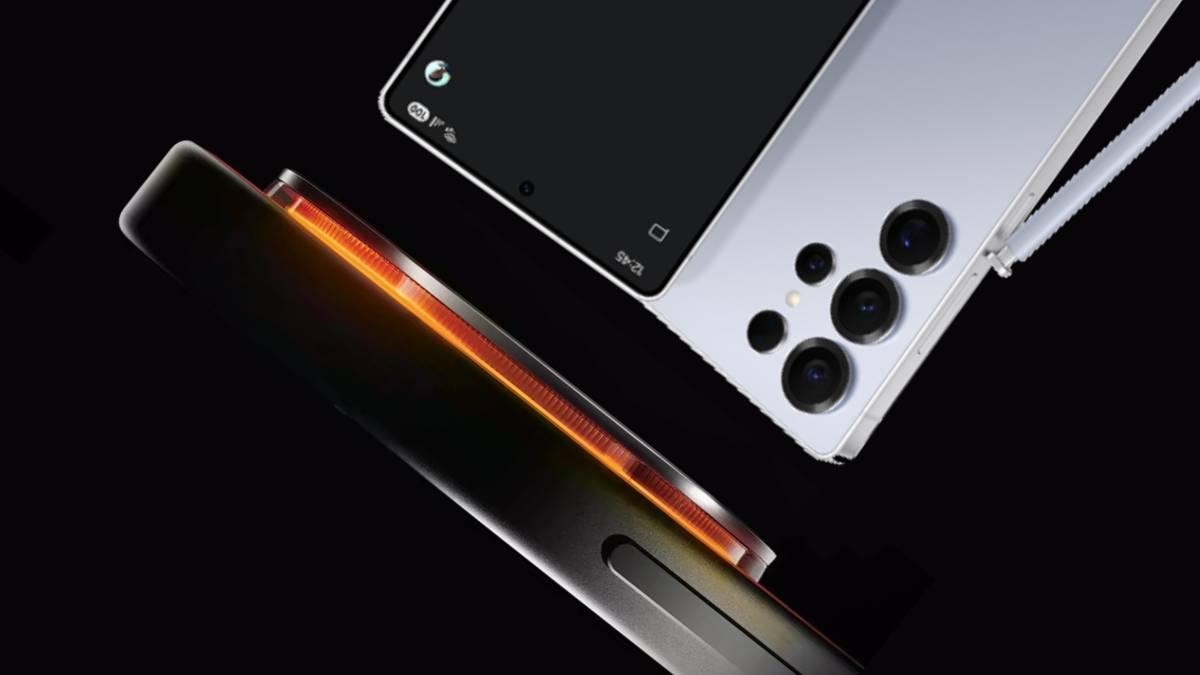
iQOO 15 Vs Samsung Galaxy S25 Ultra: As the smartphone battle of 2025 heats up, two heavyweights are ready to square off: Samsung’s Galaxy S25 Ultra, already ruling the premium Android tier, and iQOO 15, the ambitious new flagship from Vivo’s performance-centric sub-brand. With Samsung’s device starting at Rs 1,23,499 and the iQOO 15’s India pricing yet to be revealed (priced in China at CNY 4,199 or roughly Rs 51,800), the face-off isn’t just about numbers, but philosophy, refinement versus raw power. iQOO 15 Vs Samsung Galaxy S25 Ultra: Display and Design Both phones bring cutting-edge AMOLED displays to the table, but Samsung’s 6.9-inch LTPO AMOLED panel with 1440 x 3120-pixel resolution and HDR10+ support continues to set benchmarks for sharpness and brightness, peaking at 2600 nits. The Galaxy S25 Ultra also offers a robust Corning Gorilla Armor 2 front and back, wrapped in a Grade 5 titanium frame, giving it durability to match its elegance. The iQOO 15, on the other hand, boasts a slightly smaller 6.85-inch AMOLED screen with a 144 Hz refresh rate and 6000 nits peak brightness, which could make it one of the brightest smartphone displays yet. Its screen-to-body ratio of nearly 92.5% ensures a nearly bezel-free viewing experience. Samsung’s curved edges are gone, but the ergonomics remain top-tier, while iQOO’s sleek, lightweight frame could appeal to gamers seeking comfort during long sessions. iQOO 15 Vs Samsung Galaxy S25 Ultra: Camera Power When it comes to optics, Samsung flexes its muscles. The Galaxy S25 Ultra features a 200 MP primary wide-angle camera, complemented by a 50 MP ultra-wide, 10 MP telephoto, and 50 MP periscope lens with up to 5x optical zoom and 100x digital zoom. The phone supports up to 8K video recording at 30fps, promising cinema-grade results. iQOO counters with a 50 MP triple rear camera setup (wide, telephoto, and ultra-wide) and a 32 MP front shooter. While it lacks Samsung’s multi-lens versatility, it may leverage computational photography to narrow the gap. The 12 MP front camera on the Galaxy still holds its own, offering 4K video recording and the signature Samsung colour profile that fans love. iQOO 15 Vs Samsung Galaxy S25 Ultra: Battery and Performance Samsung equips its flagship with a 5000 mAh battery, backed by 45W fast charging, 15W wireless, and 4.5W reverse wireless charging. The Snapdragon 8 Elite for Galaxy chip powers the device, ensuring smooth multitasking across productivity, gaming, and AI-assisted features like Google Gemini and Circle to Search. The iQOO 15 pushes boundaries with a massive 7000 mAh battery and 100W fast charging, ensuring near-instant refuels. Its Snapdragon Elite Gen 5 processor slightly outpaces Samsung’s on paper, running at 4.6 GHz compared to 4.47 GHz. Combined with Funtouch OS 16 on Android 16, it’s clearly tailored for raw speed and long battery life. iQOO 15 Vs Samsung Galaxy S25 Ultra: Verdict The Galaxy S25 Ultra remains the gold standard for all-around Android performance, luxurious design, stellar cameras, and long-term software support with seven years of OS and security updates. But the iQOO 15 is shaping up to be the new-age disruptor, promising raw horsepower, massive battery endurance, and lightning-fast charging that could redefine flagship expectations in India once pricing is revealed. In short, Samsung is still the king of polish, but iQOO may just be the prince of power waiting to claim its throne.

//