Language Settings
Select Website Language
newshunt
newshunt

Filters

Channels
Topics
Other Filters

8th Pay Commission: Big Salary Hike Coming? Timeline And Arrears Explained

For lakhs of central government employees and pensioners, the 8th Pay Commission has been one of the most closely watched developments in recent months.  While updates have been gradual, the government has now provided some clarity on timelines and the process, even as key questions around salary hikes remain unanswered. Government Sets the Clock Ticking In a written reply in Parliament, Minister of State for Finance Pankaj Chaudhary confirmed that the government formally constituted the 8th Central Pay Commission on November 3, 2025. “The Government has notified Resolution dated 03.11.2025 for constitution of 8th Central Pay Commission (CPC), along with appointment of the Chairperson and Members, that will make its recommendations on various issues viz. Pay, Allowances, Pension, etc. of the Central Government employees within 18 months of its constitution,” he said. The Commission has been given a deadline of 18 months to submit its recommendations. This means the report is expected sometime in 2027, depending on how the process unfolds. However, the government has made it clear that the financial implications will only be known after the recommendations are finalised and accepted. Stakeholder Inputs: Not Just a Top-Down Exercise The 8th Pay Commission is actively gathering feedback from a wide range of stakeholders rather than working in isolation. An 18-question survey has been uploaded on the MyGov portal, inviting responses from ministries, departments, state governments, employees, pensioners, unions, academicians and even individual citizens. The deadline to submit responses is March 31, 2026, and all submissions must be made online. This consultative approach is aimed at ensuring that the recommendations reflect real-world concerns across sectors. When Will the Salary Hike Actually Be Credited? While the Commission is expected to be effective from January 1, 2026, on paper, employees may have to wait longer to see the revised salaries in their bank accounts. CA Manish Mishra, Founder of GenZCFO, explained the likely timeline. “It is true that the 8th Pay Commission is said to be effective from 1 January 2026 on paper, but in practical terms the higher salaries will first probably not reach the employees’ bank accounts till late 2026 or during the financial year 2026-27, just like the delays experienced after previous pay commissions,” he said. This suggests that while the policy may be backdated, the actual implementation could follow a staggered timeline. Arrears: Will You Get Back Pay? There is some relief on this front. Experts indicate that arrears are likely to be paid once the revised salaries are implemented. "Arrears will likely be computed from January 1, 2026, the date that has been set as the end date for the 7th Pay Commission, even if payment is actually made later after the commission's recommendations are cleared," Mishra added. In simple terms, even if the hike is delayed, employees are expected to receive the difference for the interim period. How Much Salary Increase Can Be Expected? There is no official confirmation yet on the extent of the salary hike, but early projections suggest a moderate increase. Pratik Vaidya, Managing Director and Chief Vision Officer at Karma Management Global Consulting Solutions, pointed to past trends as a useful benchmark. “Two anchors help frame expectations: what earlier commissions did, and today’s macro-economy. The 6th CPC delivered roughly a 40 per cent average hike, while the 7th CPC’s overall impact on pay and allowances is often placed around 23-25 per cent, with a uniform fitment factor of 2.57,” he said. Based on these trends, initial estimates for the 8th Pay Commission suggest a potential increase in the range of 20-35 per cent. What Will Decide the Final Numbers? Despite early estimates, experts caution that the final outcome will depend on multiple economic and policy factors. “Most early projections for the 8th CPC talk of a 20-35 per cent rise, with a possible fitment factor somewhere in the 2.4-3.0 band and higher entry-level basic pay. But these are scenarios, not commitments. The final number will depend on inflation over the next 12-18 months, fiscal space after the 16th Finance Commission, tax buoyancy and political appetite,” Vaidya explained. This means that while expectations are building, the final recommendation could still vary significantly. Clarity on Process, Not Yet on Pay For now, the government has provided greater clarity on the timeline and process of the 8th Pay Commission. However, the key question, how much salaries will actually increase, remains unanswered. For employees and pensioners, the wait continues. While the framework is now in place, the real impact on take-home pay will only become clear once the Commission submits its recommendations and the government takes a final call.

IPL 2026 Full Schedule Announcement: Devajit Saikia Shares Major Update

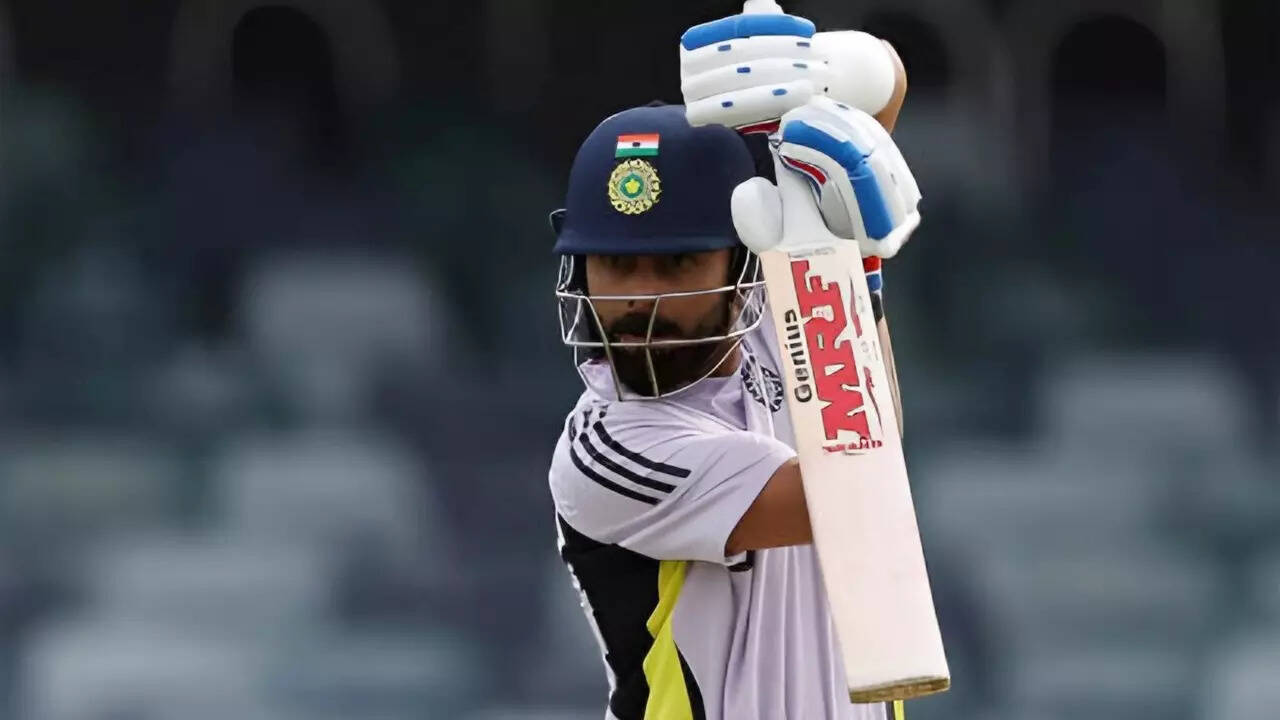
IPL 2026 full schedule annoucement: BCCI is preparing to release the complete itinerary for the second phase of Indian Premier League 2026 tournament. Joint Secretary Devajit Saikia confirmed that the remaining IPL matches schedule, including the crucial knockout stages (playoffs) and the grand finale, will be made public shortly. There are reports claiming that BCCI is expected to announce IPL 2026 full schedule by the end of this week (March 27-29, 2026). The phase 1 schedule, for first 20 matches (until April 12), has already been announced earlier. Why full schedule still not announced? According to Saikia, the delay in releasing the full schedule of IPL is a strategic move to ensure smooth logistics. Security Coordination: BCCI works closely with various state governments to ensure police personnel are available, especially in cities hosting multiple sporting or political events. Travel Logistics: With 10 teams moving across the country, the "Phase 2" IPL schedule aims to minimize travel fatigue and optimize the home-and-away balance. Focus on North-East: Guwahati's Role Saikia, who also hails from the Assam Cricket Association, highlighted the success of Guwahati as a premium IPL venue. Rajasthan Royals' Second Home: The Barsapara Stadium is expected to host at least two home games for Rajasthan Royals in the latter half of the season. Growth of Game: Saikia noted that the overwhelming response from fans in the North-East has made Guwahati a permanent fixture on the IPL map, proving that the league’s "expansion strategy" is working. Venue for Final M. Chinnaswamy Stadium in Bengaluru is officially cleared to host matches in IPL 2026 following government approval. Reports confirm the venue is scheduled to host the season opener (RCB vs SRH) on March 28, 2026, and is set to host a playoff match and the grand finale as well. Also on ABP Live | BCCI Cancells IPL 2026 Opening Ceremony Ahead Of RCB vs SRH Clash Also on ABP Live | Will Royal Challengers Bangalore Change Its Name? Ananya Birla Responds

UAE car insurance explained: Which one is better? Does it cover flood damage

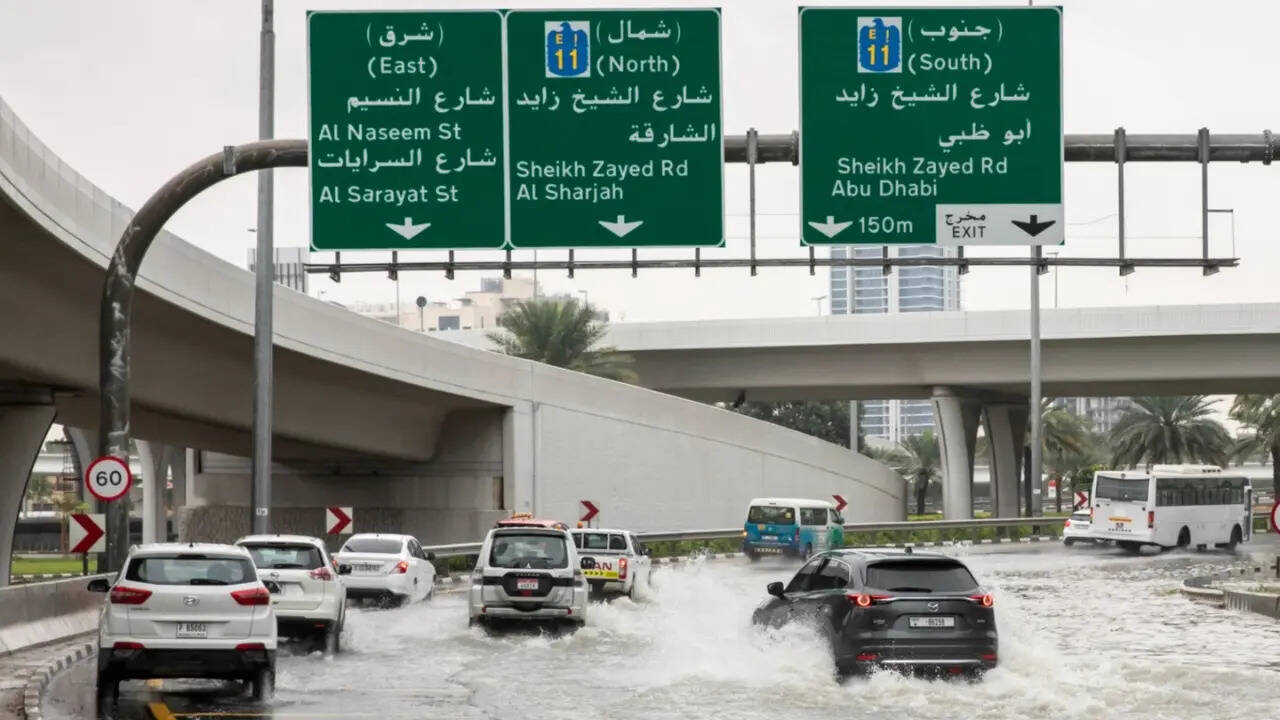
UAE car owners face a crucial choice: mandatory third-party insurance or optional comprehensive cover. While third-party is cheaper, it leaves your own vehicle and medical costs exposed. Comprehensive offers full protection against damage, theft, and weather, becoming increasingly vital due to rising repair expenses and extreme weather risks. Consider your vehicle's value and your risk tolerance.

Israeli Official Claims IRGC Navy Chief Alireza Tangsiri Killed In Bandar Abbas Strike

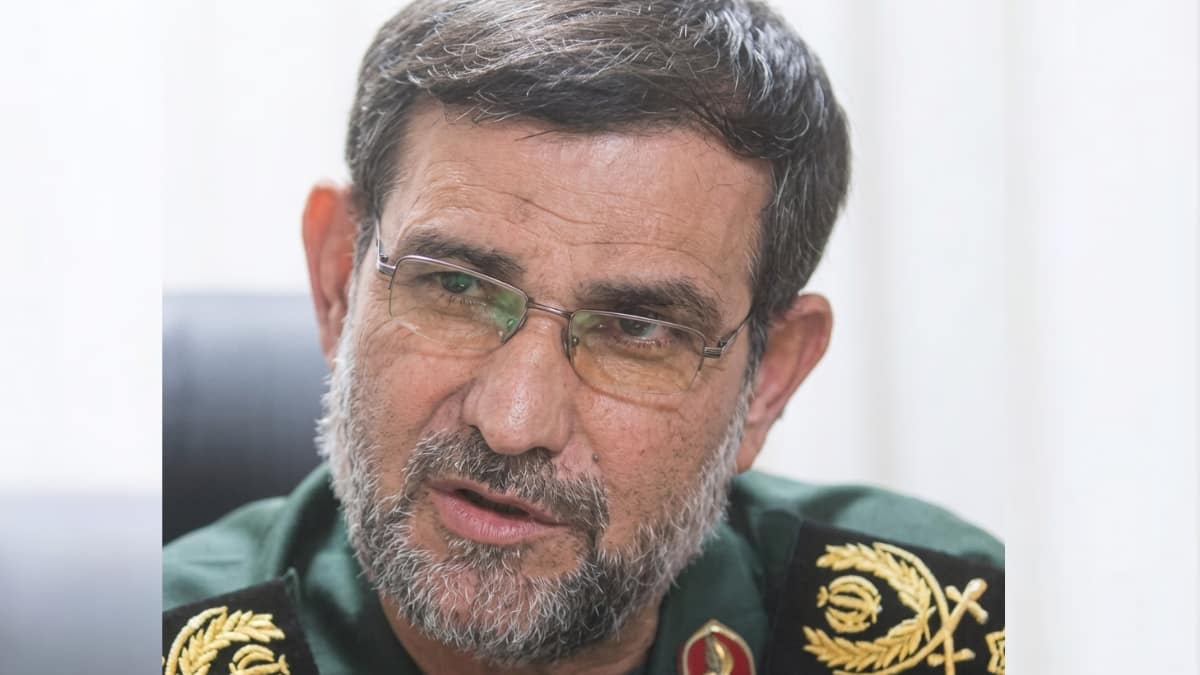
Tensions across the Gulf sharpened on Thursday after Israel claimed it had carried out a strike in Bandar Abbas, reportedly killing Commodore Alireza Tangsiri, the head of Islamic Revolutionary Guard Corps Navy. The coastal city, situated close to the Strait of Hormuz, is one of Iran’s most strategically important maritime centres. According to an Israeli official cited by The Jerusalem Post, the strike specifically targeted Tangsiri, who had been leading the IRGC Navy since 2018. If confirmed, the development would mark a major setback for Iran’s military command during a period of heightened regional hostilities. Veteran Commander With Hardline Stance Tangsiri was considered a seasoned naval figure within Iran’s security establishment, having first gained prominence during the Iran-Iraq War. Before assuming overall command, he led the IRGC Navy’s 1st Naval District in Bandar Abbas. He was appointed to head the force by Ali Khamenei in August 2018. Over the years, Tangsiri became known for his strong rhetoric against the United States and Israel. In 2007, he warned that Iran would “chase” US forces “even to the Gulf of Mexico” if provoked. In 2016, following the detention of US sailors in Iranian waters, he described the episode as “U.S. forces surrendering to Iran.” More recently, he played a prominent role in showcasing Iran’s naval capabilities. In February 2025, he unveiled the country’s first drone carrier, calling it the “largest naval military project” in Iran’s history. In subsequent remarks, he warned adversaries that they would be “sent to the depths of hell” if they challenged Iran’s position, and in April 2025 declared the US Navy “incapable” of contesting Iran’s maritime influence. Conflict Expands Across Multiple Fronts The reported strike comes amid escalating tensions involving Israel on multiple fronts. Along its northern border, Israeli forces are engaged in clashes with Hezbollah in southern Lebanon. Israeli authorities confirmed that one of their soldiers was killed during operations in the region, bringing total fatalities in that theatre to three since early March. The simultaneous developments suggest a widening arc of confrontation, with Israel conducting operations both near and far from its borders. No Official Confirmation From Tehran Yet Despite Israel’s assertion, Iran has not officially confirmed the death of Tangsiri. The absence of a statement from Iranian authorities has left room for uncertainty, and independent verification of the claim is still awaited. Even so, the report has already triggered speculation about its potential impact on Iran’s naval command structure and its strategic posture in the Gulf. Analysts say that if confirmed, the loss of such a senior commander could have significant operational and symbolic consequences.

Middle East Crisis: Iran’s Ballistic Missile Strike on UAE Escalates War, Casualties Reported in Abu Dhabi

A major escalation has unfolded as Iran launched ballistic missile attacks on the United Arab Emirates, causing panic and destruction. In Abu Dhabi, two people were killed and three injured, while several vehicles were destroyed in the blast. Air defense systems attempted interceptions, but falling debris still caused damage. This marks a shift from earlier drone strikes to high-speed ballistic missile attacks, indicating a more dangerous phase of the war. Iran has also targeted Dubai, expanding the conflict across Gulf nations. Meanwhile, tensions continue to rise between United States, Israel, and Iran. The US has warned of possible ground operations, while Iran has rejected negotiation offers. Israel has intensified strikes on Iranian targets, and Iran claims it shot down an F-18 fighter jet. Across the region, attacks have expanded to Saudi Arabia and Kuwait, with drones and missiles targeting US bases. Despite claims of weakening Iran, continuous missile strikes highlight its ongoing capability, as the Middle East conflict grows more severe and widespread.

BCCI Cancells IPL 2026 Opening Ceremony Ahead Of RCB vs SRH Clash

The 2026 IPL season will kick off on March 28 with the opening match between Royal Challengers Bangalore and Sunrisers Hyderabad at M. Chinnaswamy Stadium in Bengaluru. Unlike previous seasons, BCCI has decided not to hold the traditional opening ceremony. According to a report in Times of India, this decision is a tribute to the 11 lives lost in a stampede in Bengaluru on June 4, 2025, following RCB's first IPL title win. Instead, BCCI plans a grand closing ceremony on May 31. "Due to last year's tragic incident on June 4 last year, there will be no formal function on the day of the start of IPL -2026 (in Bengaluru). The BCCI is not organizing any cultural or entertainment show at the start of IPL-19 as a mark of respect to the departed souls due to that tragedy on June 4, 2025. "However, BCCI and the IPL Governing Council are planning a grand entertainment function at the closing of the IPL, on the day of the final (May 31)," Devajit Saikia, Secretary of Board of Control for Cricket in India, told to TOI. This is not the first time the IPL has cancelled its opening festivities due to tragedy. In 2019, the opening ceremony was called off following the Pulwama attack, with funds redirected to families of martyred CRPF soldiers. Also, BCCI will announce the schedule for the remaining IPL 2026 matches soon. When will IPL 2026 full schedule be announced? BCCI is expected to announce the full schedule for IPL 2026 by the end of this week (March 27-29, 2026). While the board released an initial fixtures list on March 11 covering the first 20 matches (until April 12), the complete itinerary was delayed due to the coordination of security logistics with the State Assembly elections in West Bengal, Assam, and Tamil Nadu. BCCI Joint Secretary Devajit Saikia recently confirmed that the remaining 54 matches are being finalized. The tournament is confirmed to run until May 31, 2026, with the final scheduled to take place at M. Chinnaswamy Stadium in Bengaluru.

Duster Vs Sierra Vs Kushaq: Which Turbo Petrol SUV Is Most Efficient?

Fuel consumption is very important when considering a new car regardless of any segment but with petrol automatic SUVs turning out to be more popular than ever, the focus on efficiency is even more. Here we take a look at how the new Duster compares with the newest compact SUVs in terms of the fuel efficiency figures. These are the official figures and not the real world ones. Duster vs Rivals: Mileage Comparison The new Duster with a claimed efficiency of 18.4 kmpl delivers decent fuel efficiency when compared to rivals. The numbers here are of the 1.3l turbo petrol with a 6 speed dual clutch automatic gearbox. In comparison the Tata Sierra 1.5l turbo petrol with a torque converter automatic gearbox has a mileage of 13.5 kmpl. The Sierra unlike rivals does not use a dual clutch automatic for the top-end 1.5l turbo petrol and instead uses a torque converter automatic which explains the slight drop in the figure. If we bring the new Skoda Kushaq facelift into the picture then the mileage figure of 18.7 kmpl is what you get for the 1.5 TSI which like the Duster uses a dual clutch automatic but a 7 speed one. Which SUV Is Most Efficient? Here, the new Kushaq seems to be the most fuel efficient in terms of the 1.5 turbo petrols of now followed by the Renault Duster and the Tata Sierra.

'Shut Up, What Do You Know?’: Raman Roy Recalls Early Days Of India’s BPO Industry At ABP Live Podcast

Indian BPO industry pioneer Raman Roy talks about the moment that helped spark India’s BPO revolution -- an idea once dismissed, even ridiculed, but today worth billions. In the second episode of Lead Inc., an ABP Live podcast in collaboration with Elephant Connect, Roy sits down with author and host Manjiri Gokhale Joshi to reflect on the battles, breakthroughs, and bold decisions that shaped an entire industry. From being told not to enter meeting rooms to facing hostility abroad -- “Why would I sit on the same table with you?” -- Roy recounts the personal and professional resistance he endured while pitching India as a global outsourcing hub. Yet, he insists, the real transformation went beyond business: “Respect and dignity were non-negotiable,” he says, underscoring the philosophy that helped build not just companies, but careers for millions. The conversation also captures pivotal cultural shifts like the moment that paved the way for women to work night shifts. “It was a game-changing moment for the industry,” Roy recalls, highlighting how trust-building with families and inclusive workplace practices helped break long-standing social barriers. The Indian BPO story, as Roy tells it, is not just about outsourcing. It’s about ambition, resilience, and the courage to challenge the status quo. Excerpts From The Podcast Interview Manjiri Gokhale Joshi: Take us back to how this all started, especially the idea of international work being done out of India. Raman Roy: I was an employee. I worked with American Express. The concept of doing international work out of India did not exist. I was sent for training to Singapore, Hong Kong, Australia, the UK, and the US. A few meetings into that, I started raising my hand to say, “Hey, I can help you do that.” People would say, “Shut up, what do you know?” It reached a stage where they said, “Raman has come again, he’ll start talking of India. Please don’t let him enter this room.” Then they gave me something they hadn’t succeeded at for five years — a bank reconciliation. What they hadn’t done in five years, in about six weeks we had the bank account reconciled. That started a revolution literally. Manjiri: You’ve spoken about the resistance you faced globally. What did that look like? Raman Roy: These are things that I have lived. You go to the cafeteria, fill up your tray, and say, “Hey guys, can I join you?” Everybody on that table stands up, picks up their tray, and goes away. The last guy says, “Why would I sit on the same table with you?” You are using the washroom, the door opens, and someone swears at you, saying you are taking jobs away. Manjiri: There’s also that very personal moment with your wife before you took the entrepreneurial leap. Raman Roy: Yes, I was indecisive for nine months. You have a good job, a decent earning, salary comes in every month, you have a nice car, club memberships — why would anybody give that up? One morning, she turned around and said, “Would you want to live a life that says you have that opportunity and you didn’t do it?” Manjiri: How do you define leadership? Raman Roy: Five friends get together to go have a meal. One wants to have Chinese food, another says Italian and someone says something else. Ultimately, somebody takes a decision making all six go for one thing. The person who leads that effort is a leader. Manjiri: You also spoke about a moment that changed how women worked in the industry. Raman Roy: There was a lady who came to meet me. My assistant said she had been sitting for two hours and wouldn’t leave. She said, “You are spoiling everything. My daughter wants a job with you. How can she do a job with you?” I still remember that moment, it was a game-changing moment for the industry. We gave her forms, got an HR person to sit with her and we signed up 10 of her daughter’s friends. So now nobody pointed fingers, they were all working together. That is what started night shifts for women. Manjiri: Families didn’t understand why women would work night shifts. Raman Roy: Absolutely. That’s why we focused a lot on building trust. We introduced family days, invited parents to come and see the office, sit on their children’s chairs, and understand the environment. Manjiri: You’ve always emphasised respect and dignity as core to building culture. Raman Roy: Respect and dignity were non-negotiable. Whether it was employees or candidates. At one point, we were hiring 150 people a day and losing 50–60 a day. There were huge walk-ins, and we even had to call the police to manage the crowds. One of my earliest learnings was that HR people can start thinking they are God’s gift to mankind because they are giving jobs. That arrogance is dangerous. Even a candidate walking in for an interview must be treated with respect. Manjiri: You’ve spoken about nurturing talent and giving people space. Raman Roy: I remember calling the head of one of our facilities and telling him how things should be done. He told me, “I am not a Raman Roy Jr. Give me space.” That was a big learning for me. I have tried all my life to give people space to operate, as long as they don’t violate basic principles. Some of the biggest successes we had came from the shop floor. Manjiri: Many in middle management feel stuck between leadership and execution. Raman Roy: When you give people space, you have to take the good and the bad. Not everyone will stay, we may not be able to meet everyone’s aspirations, but that does not mean we stifle their capabilities. We let them grow, and we part as friends. Manjiri: What about inclusion in the workplace? Raman Roy: Inclusion comes from respect and dignity. I remember a situation where I made a mistake. I had invited some of my direct reports for a customer dinner at home, but one person was not invited because we were not socially compatible. He asked my HR head, “Should I look for another job?” I realised I had failed in inclusion. Professionally, if you respect someone, you must include them. When we sit around a table, we sit as equals. I may be the head of the organisation, but your viewpoint is as important as mine. At the end, I take the decision, but until then, you must give your viewpoint.

Ex-IPL Chairman Lalit Modi Launches Scathing Attack On Sanjiv Goenka, Calls Him A 'Clown'

Lalit Modi vs Sanjiv Goenka: The soaring valuations of Indian Premier League (IPL) franchises have sparked a fresh war of words, with Lalit Modi, first chairman of the league, launching a scathing attack on Sanjiv Goenka, the owner of recently-introducted franchise, Lucknow Super Giants (LSG), on social media. The exchange comes in the wake of record-breaking ownership deals involving IPL franchises Rajasthan Royals (RR) and Royal Challengers Bengaluru (RCB), underlining the tournament’s growing global appeal and financial muscle. Lalit Modi Hits Out At Sanjiv Goenka Seriously this guy really has a memory loss of who conceived the model. Thats ok. He just lives in his own world. We all know that 🤣🤣🤣 @DrSanjivGoenka is a 🤡wish it was his brother @hvgoenka who owned the ipl franchise. He is a true cricket fan. Not this clown - who thinks… https://t.co/m8eBdAOHHX — Lalit Kumar Modi (@LalitKModi) March 26, 2026 Sanjiv Goenka had credited the IPL’s robust structure and governance as the driving force behind its financial success, stating that much of that traced back to the vision of Jay Shah, former Honorary Secretary of the Board of Control for Cricket in India (BCCI), and current International Cricket Council (ICC) chairman. The former IPL chairman, Lalit Modi, did not hold back while responding to Goenka’s remarks on social media regarding the league’s valuation growth. "Seriously this guy really has a memory loss of who conceived the model. Thats ok. He just lives in his own world. We all know that @DrSanjivGoenka is a (clown emoji) wish it was his brother @hvgoenka who owned the ipl franchise. He is a true cricket fan. Not this clown - who thinks his tweet will change history. Just proves he has zero knowledge. Just swelled up head Jai hind. @IPL," Record-Breaking IPL Franchise Sales The controversy coincides with two landmark deals that have reset benchmarks in IPL franchise valuations. A consortium led by US-based entrepreneur Kal Somani secured ownership of Rajasthan Royals at an eye-watering $1.63 billion (approximately Rs 15,286 crore). Meanwhile, Royal Challengers Bengaluru emerged as the most expensive franchise in IPL history after being acquired by a group featuring Aditya Birla Group, Blackstone, Times of India Group, and Bolt Ventures. The consortium agreed to pay a staggering $1.78 billion (over Rs 16,000 crore) for full ownership. These massive deals highlight the IPL’s evolution into one of the most valuable sporting leagues globally. From its inception to its current stature, the league has consistently attracted top investors and global attention.

//